What the Save File Knows: Reading Strength in the Games Clients Choose

Somewhere on your caseload there's a client who has died to the same boss four hundred times, with the same sword at the same fog gate, under a YOU DIED screen in letters the size of their hope. Every time, they picked the controller back up and walked down the corridor to try again.
That's clinical data about frustration tolerance, persistence, and a working relationship with failure that many clients can't show anywhere else in their week, and once you listen to what clients play the way you listen to what they say, their game libraries turn out to be one of the richest assessment sources nobody trained us to use.
I'd stamp this on every intake form if I could: clients' games have already trained many of the traits we work to build, so the work in session is helping them transfer those traits.
The client who loves Souls games has perseverance with its own death counter, yet doubts it applies anywhere a screen isn't involved. The client who lives in Stardew Valley knows exactly what a day without performance feels like and still can't find a spot in their actual life where that day is allowed, which is why I treat the game as evidence about the person playing it.
A field guide
These are the readings I make most often, none of them diagnoses and all of them hypotheses to test, because the same game means different things in different hands. As starting points for conceptualization, they still beat "noncompliant with homework" by a wide margin.
Souls games (Elden Ring, Dark Souls, Sekiro). Perseverance under conditions built to be unfair. Players of these games have made peace with progress that stays invisible until it suddenly shows up, and they know the difference between "I can't" and "I can't yet" in their bodies, even if they've never phrased it that way. The clinical bridge is short: these clients already know that mastery looks like repeated failure with small gains mixed in, and what they doubt is that their own lives allow leveling up. Point at the death counter and ask what they think they've been doing.
Cozy games (Stardew Valley, Animal Crossing, Cozy Grove). On the surface these can look like avoidance, with low stakes, no timers (or gentle ones), and nothing to optimize. Stay with one a little longer and you'll see a player looking for a world with no evaluation in it, where nobody in Pelican Town needs them to justify their existence. For clients living under performance pressure, burnout, or a family that only gave love conditionally, a cozy game is where they practice existing without earning it, and a nervous system is finally getting a turn. Ask what their coziest game day looks like, and then, carefully, what a twenty-minute version of it might look like on a Tuesday.
Childhood-joy revisits (Kingdom Hearts, Dreamlight Valley, Spyro, Pokémon). Yes, the one with the Disney characters. Kingdom Hearts follows a spiky-haired kid who teams up with Donald and Goofy to fight the encroaching darkness with the power of friendship, people cry at the ending, and it works. Who among us never wanted to go on an adventure with Goofy? Many adults who pick these games up are revisiting a comforting place from childhood, a version of joy from before joy had to be earned, and tending an earlier self who still believes sincerity is a load-bearing wall. That's inner child work whether or not they signed the consent forms, and a client who plays both Kingdom Hearts and Dreamlight Valley is running one ongoing project with two work sites. Reparenting needs little explaining to this client once you say out loud that they already volunteer for it.
This category covers two groups. Remasters and remakes bring a client back to a specific game from their own childhood, such as the Spyro Reignited Trilogy, the Crash Bandicoot N. Sane Trilogy, Link's Awakening, the Pokémon mainline games and their remakes, Banjo-Kazooie, and the older LEGO games. Newer games can borrow the feeling without any shared history, as Disney Illusion Island, Sea of Stars and other SNES-era RPG homages, the Ghibli-adjacent worlds of Ni no Kuni, Kirby and Yoshi titles, Mario Kart, and Minecraft do.
The two groups call for different questions. With a remaster, ask what was happening in their life the first time they played it, who was in the room, and what the console meant in that house; with a new game that borrows the feeling, ask what it gives them that adulthood doesn't.
Nostalgia carries grief for some clients. If the childhood a game points back to was unsafe, the same title can bring comfort and loss together, and the reading above may fit only part of what's happening, so ask before assuming which one you're looking at.
Roguelikes (Hades, Slay the Spire, Dead Cells). Failure as raw material. A roguelike player has separated the attempt from identity: dying ends a run and passes no verdict. Compare that with the same client's relationship to job interviews, where one bad one becomes a character reference the inner critic reads aloud for months. The reframe is already rendered, with excellent art direction, and asking "In Hades, what changed after the fiftieth attempt?" is a defusion exercise wearing a trench coat.
Sandbox builders (Minecraft, Terraria). Agency with no failure state: you can build or not build, and nothing can be lost. For clients whose environments offer no arena of benign control, the sandbox is a proof of concept (I can shape a world, and I have). Ask what they built last, and you'll usually hear either deep calm or, sometimes, a fortress; both are worth knowing about.
MMOs and live-service co-op (Final Fantasy XIV, Destiny 2, Fallout 76). Found family and identity rehearsal in a lower-risk social body. A client who reports having no one, yet keeps a weekly raid schedule with a fixed group of people, is telling the truth about the loneliness and just doesn't count the game. Naming that infrastructure without minimizing the loneliness it compensates for is honest social work. The weekly loop also holds structure and commitment, which makes it behavioral activation the client designed and pays a subscription to maintain.
Moral-weight games (Frostpunk, This War of Mine, The Witcher). Someone choosing Frostpunk is rehearsing hard decisions in a place built for rehearsal. Ask about the aftermath: if a harsh decision from the game still haunts them, you've documented a moral compass their daily life may never give them credit for carrying. For clients with caregiver guilt or decision fatigue, this is values clarification with the safety rails on.
Branching-choice horror (Until Dawn, The Dark Pictures Anthology). These games give the player a few seconds and a set of imperfect options, then keep the story moving whatever happens, including the death of a character you might have saved with a different choice. Choices can't be taken back within a run and their consequences stay hidden until later, which makes the games a decent practice ground for perfectionism, acceptance, and decision making: the player has to act before knowing enough, live with the result, and keep playing. Ask what they did after the first choice that went wrong, whether they pushed on, replayed the chapter, or reached for a guide, because each answer shows a different relationship to imperfect outcomes. As with any horror title, check how playing actually feels before assuming it's regulating.
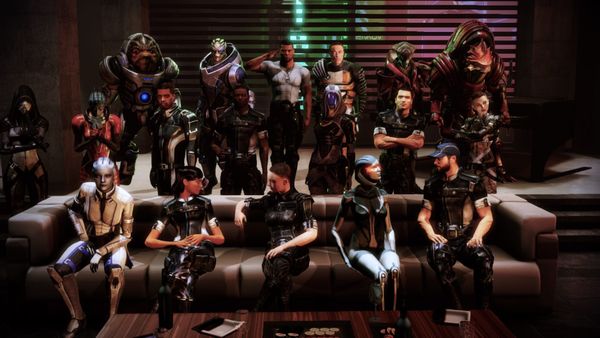
Companion approval systems (Dragon Age, Mass Effect, Baldur's Gate 3). These games make interpersonal dynamics visible and measurable, so the interesting information is how the client plays them. The optimizer runs the party with a gift guide open and save-scums before every conversation, managing approval like a resource and treating disapproval as a failure state. Some of these players notice mid-run that they're anxious about making a fictional character unhappy with them, and that noticing is worth more than any rapport question I know. The roleplayer picks the dialogue their character would pick and accepts the disapproval that follows, which shows a tolerance for being disliked while holding a line, a capacity plenty of clients lack, demonstrated on demand. Whoever the player romances and always keeps in the party tells you about attachment templates: who feels safe, who feels exciting, who gets benched. The approval meter is a mirror, so you can ask which side of it they think they're on.
Grounded, punishing realism (Kingdom Come: Deliverance). A player who chooses the game where you fail at sword fighting for twenty hours because Henry is bad at sword fighting is turning down fantasy escape on principle. They want the world to be hard and real, and they want to find out whether effort still counts in it. Underneath that is often a client running an experiment: does trying still mean anything? Handle it with care, because the experiment usually concerns something that happened to them and has little to do with Henry.
Wide-open space (No Man's Sky, exploration-forward games). Sometimes this is curiosity with the brakes finally off, and sometimes it's avoidance wearing a very nice jacket. Telling them apart makes a good therapeutic question and, frankly, a good question for the rest of us: what are you out there looking for, and what's back home that you aren't looking at? The game won't answer that, though it will hold the door.
Where I stop romanticizing
Two guardrails apply, because the readings above will lie to you if you use them like a decoder ring.
First, the game tells you where to look and leaves the conclusion open. A Stardew Valley save means one thing in the hands of a burned-out ER nurse and another in the hands of an autistic teenager whose school day is a sensory assault, because the same game meets different nervous systems and does different work. Treat the reading as a hypothesis and bring it into the room in the client's words, where they get to disagree with it, since "What do you make of the fact that you gravitate there when the week has been bad?" goes a lot further than any taxonomy.
Second, transfer is the work, and transfer is hard. Clients don't automatically see that grinding and job-hunting are the same skill with different drop rates; if it were automatic they'd have done it already, which is one reason "well, games teach problem solving" has never once ended an argument. The bridge gets built in session, slowly: name the capacity, credit the client with it, get curious together about where else it might apply, and let them pick the first place to try it.
What to take from this
The next time a client lights up describing a three-hundred-hour farm, four hundred boss attempts, or a spiky-haired inner child, resist the urge to nod politely and move on to the real material, because that is the real material, and it just arrived in a nice car.
Your client has spent years training somewhere safe enough to use what they have. The perseverance and the self that can exist without performing are both already there, and the inner child never went anywhere; it has a keyblade.
The work is the bridge, and you know how those get built: in a room where somebody finally believes the client can carry it.
Click here for a table of 150+ games, what they may indicate about your clients' strengths, and the skills they can teach.