You Can't Save Everyone: What Choice-Based Horror Teaches About Imperfect Decisions

The designer's trap
Eight friends go up a mountain for a winter weekend. In Until Dawn, every one of them can make it to sunrise, and every one of them can die. Supermassive Games put the perfect night in the code and then made it nearly impossible to find on purpose.
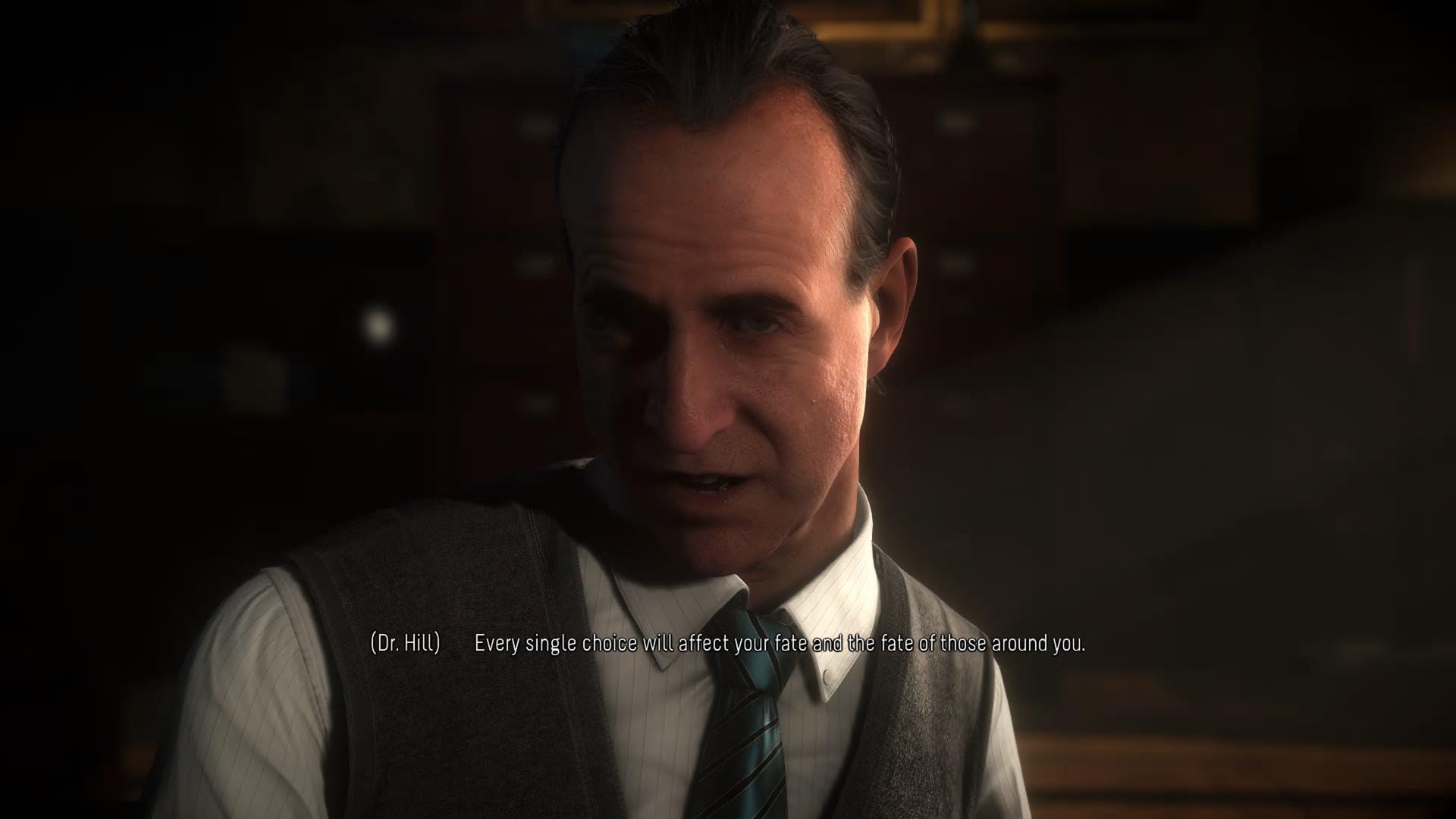
To get there, you need information the game keeps from you. Early on, during target practice, you can shoot a squirrel; the game flags that as a choice with consequences and then says nothing more about it for hours. Totems scattered across the mountain show you flashes of possible futures, out of order and without context. You can play your first run as carefully as you know how and still watch someone you were trying to protect die in the snow.
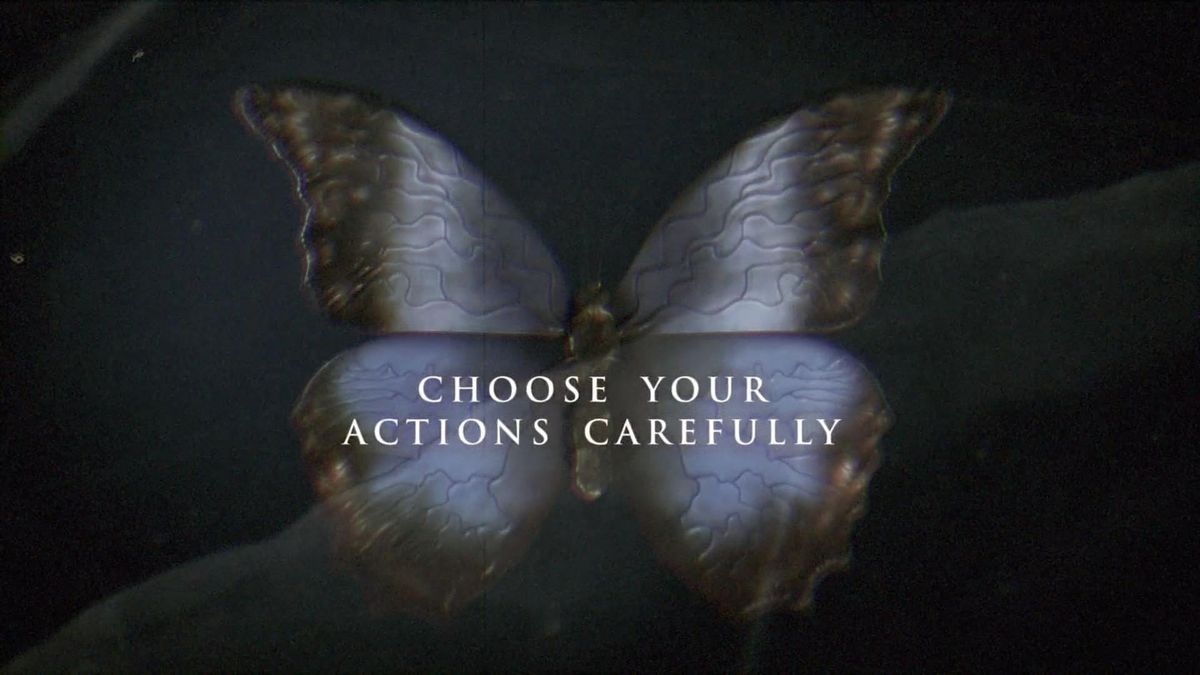
The Butterfly Effect menu tracks each choice as it ripples forward, and at first glance it looks like a scorecard. I read it as the game's thesis: you will make choices without enough information, and you will live with them. The Quarry and The Dark Pictures Anthology, the studio's later games, are built on the same idea.
If you struggle with perfectionism, that describes most of adult life. These games squeeze it into about ten hours on the couch, with fictional stakes and feelings real enough to work with in session.
Why these games, specifically
Lots of games have choices in them. I keep coming back to the Supermassive formula because its mechanics recreate the conditions perfectionism handles worst: incomplete information, time pressure, consequences you can't take back, and no visible right answer.
Timed choices
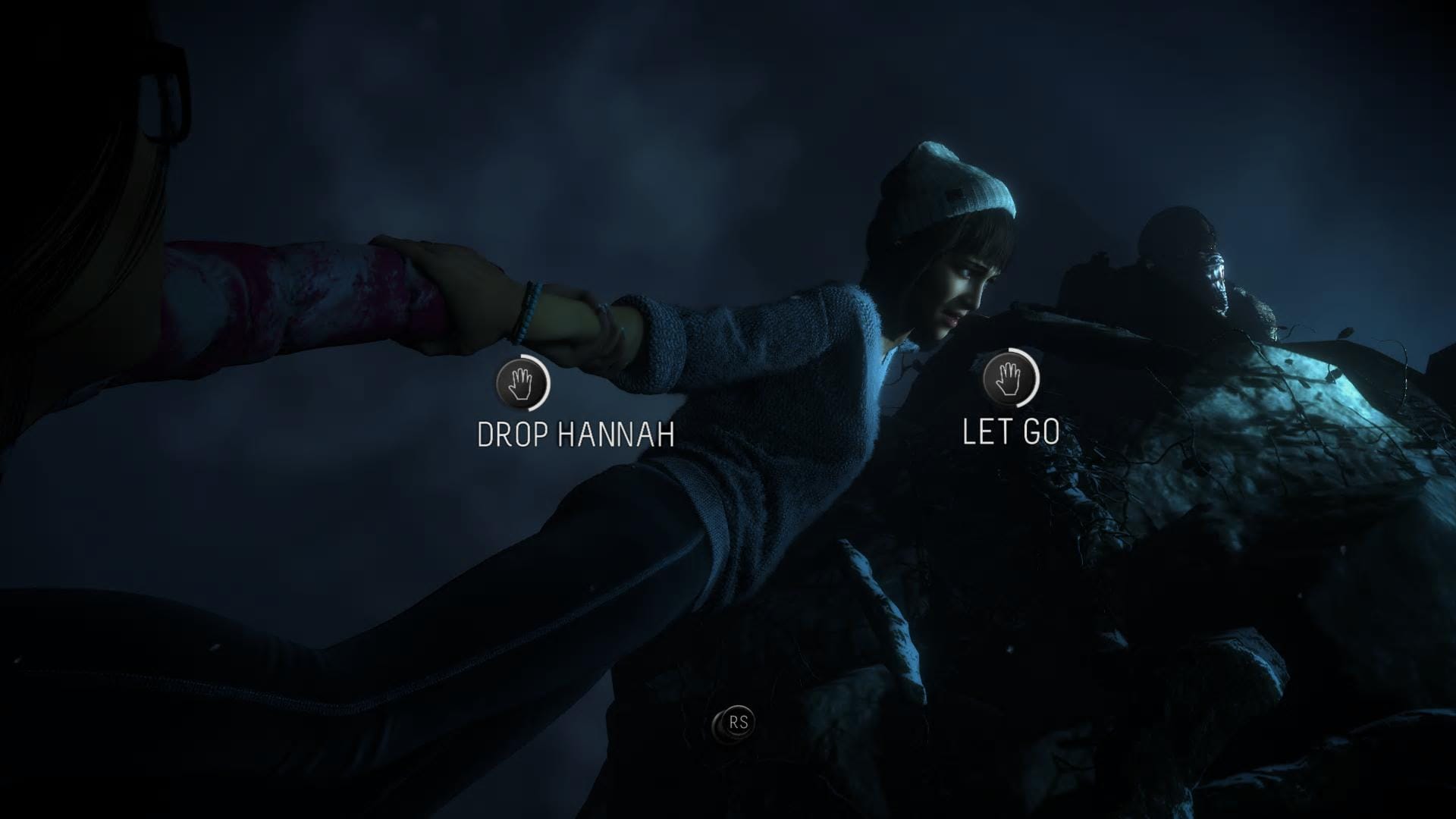
Decision prompts come with a timer that drains in a few seconds. You can't research, ask anyone, or wait until you feel sure, and if the timer runs out, the story moves on without you. Some mechanics go after your body directly. In Until Dawn's Don't Move sequences, something is hunting nearby and you have to hold the controller perfectly still, so your own shaking hands can get a character killed. The Quarry has you hold a button to keep a hiding character's breathing steady.
Real decisions rarely wait for your heart rate to come down either. The game lets you practice choosing in that state, and nothing in your actual life breaks when you get it wrong.
Delayed consequences
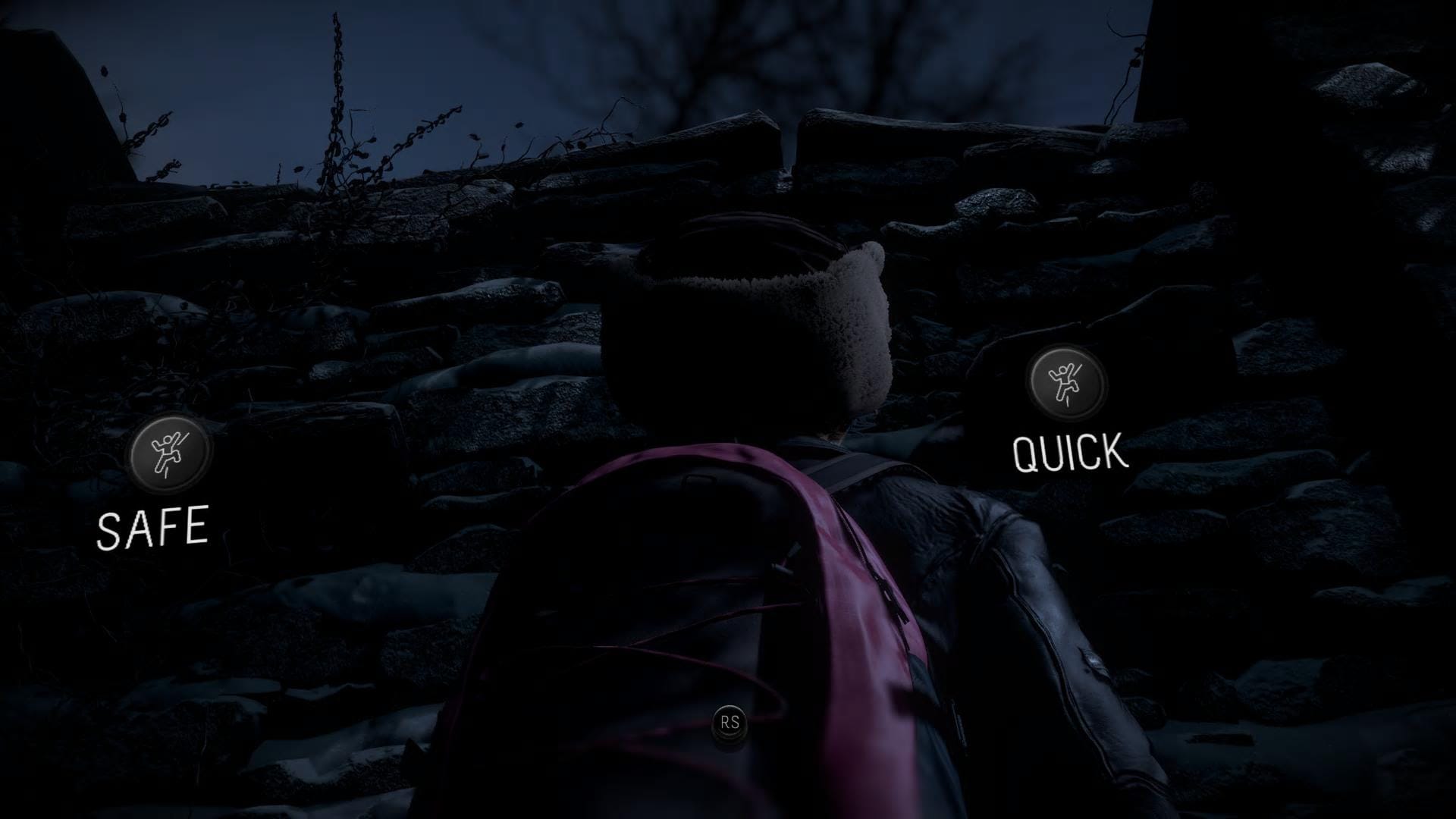
A choice in the first act often pays off hours later, sometimes in a scene that seems to have nothing to do with it. You finish a chapter with no idea whether you did well. Real decisions tend to work like this: you take the job, and you find out whether it was right a year in. The game gives you practice sitting in that stretch between choosing and finding out.
Visible, unavoidable loss
When a character dies, the camera stays on it. Then the game cuts to someone else and keeps going, because the story was written to go on without that person. You see the loss in full and the game carries on anyway, which is about as close to decatastrophizing as art direction gets. Until Dawn's closing credits even replay what happened to each character, so you take in the whole accounting before you put the controller down.
One run, no reloads
Until Dawn has no save slots. It autosaves constantly, and the only way to undo a choice is to restart or finish and begin again. I think that single run is where most of the benefit comes from. A game that lets you reload every bad outcome builds a different habit (try, check, undo, retry until it's perfect), and perfectionists already know that loop well.
The Quarry adds a wrinkle I find useful. Its Death Rewind feature lets players undo up to three deaths, and it unlocks after you finish the game once (or right away with the Deluxe Edition). Clinically, I'd have a client play the first run without it. A later run with rewinds turns into its own conversation: which deaths did you spend them on, and which ones did you let stand?
Some players also force-quit to the console menu to beat the autosave after something goes wrong. If a client mentions doing that, ask about it. It tells you a lot about how they handle mistakes.
The perfectionism connection
Perfectionism runs on a cost calculation: if I choose wrong, the result will be unbearable, so I have to be certain before I choose. Cognitive models describe this as two linked errors, overestimating how bad a mistake will be and underestimating how well you'll cope with it. You know the results: rumination, procrastination, decisions made late or handed off to someone else.
Insight doesn't get people as far as they'd like here. Most of my perfectionistic clients can tell me, correctly, that one wrong choice won't ruin their lives, and they still freeze. They know it. They haven't felt it.
Choice-based horror lets them feel it. Over one playthrough, a player makes dozens of choices under pressure, gets several of them wrong, watches every consequence play out, and keeps going while the world keeps going around them. Each of those is a rep. The game can't teach anyone to stop caring about outcomes, and I wouldn't want it to; the caring is what makes the choices heavy. It gives them repeated proof that they can survive an outcome they didn't want.
I'd call this exposure-adjacent. It has the core ingredient of exposure work: you predict something will be intolerable, you go through it, and the prediction turns out wrong. It's missing the rest. There's no fear hierarchy, no clinician pacing the work, and no structured tracking of distress, and the feared outcome is a fictional death standing in for whatever the client actually fears. I wouldn't call it exposure therapy or tell a client it can replace exposure therapy. It can prepare the ground for that work, or give a client who isn't ready for it a lower-stakes place to start.
The horror disclaimer: use at your discretion
The fear does real work here. Choosing with your heart pounding is what decisions feel like in real life, so the arousal is part of the practice, and the choices and the conversation afterward are where the therapy happens. The arousal is also the reason this recommendation helps some clients and harms others.
Screen before you suggest it
Start with panic disorder. These games are designed to produce a racing heart, shallow breathing, and startle, which can feel exactly like the start of an attack. For clients with PTSD or other trauma histories, check the specific title against their history first; between them, these games include stalking, being hunted, captivity, and graphic injury. Ask about cardiac conditions, since sustained jump scares and startle put real strain on the body. And a client who already struggles with sleep or nightmares doesn't need ten hours of horror imagery, especially at night.
If a client's window of tolerance is already narrow, pick a different game. Playing this one in shorter sessions still delivers the same spikes.
Recommending a game ethically
A therapist's suggestion carries weight, so make it an offer the client can easily turn down. Before they decide, describe what the game contains, including the scariest parts. Point them to content warnings; Does the Dog Die? lists specific content flags by title. Tell them outright that quitting is allowed. If they stop because it got to be too much, that was a decision made under pressure too, and you can debrief it like any other.
Let the client set the conditions. Playing in daylight with a friend on the couch weighing in on every choice still counts.
Bridging the mechanic to life
The debrief is where the game becomes therapy. Some questions I use:
- What did you notice right after a choice you regretted? In your body? In your thoughts?
- When did you know it was the wrong call: right away, or later?
- What did you tell yourself about that choice? Would you say the same thing to a friend who made it?
- What was it like to keep playing after losing someone?
- Was there a choice you're glad you made fast, before you had time to overthink it?
Then I bring it back to their life. Where in your week is there a decision you're ruminating on instead of making? What would happen if you treated it like a timed prompt, chose with what you know, and let the consequences show up when they show up?
Screenshots and clips help. When a client brings in the moment their favorite character died, you have a concrete scene you've both seen, and the feeling attached to it is usually still close to the surface.
The capacity is already there
Game World Therapy starts from the idea that players already use many of the skills they come to therapy hoping to build. Anyone who makes it through a night on Blackwood Mountain has made dozens of imperfect decisions under pressure, lost people they cared about, and kept playing. They already have the capacity, and the game shows it to them somewhere they're willing to look.
A game never made anyone well. It gives the clinician a shared, vivid text to work from, and for a perfectionistic client, it might be the first place they've let a mistake stand.