Befriending the Villains of Dreamlight Valley: Meeting the Shadow Self With Curiosity


Villains are often framed as problems to be removed. In stories, they’re defeated, exiled, or destroyed so the world can return to order. In real life, we tend to apply the same logic internally. When anger, control, resentment, manipulation, fear, or emotional distance surface within us, we’re quick to label these reactions as failures rather than signals, and we respond by suppressing them, judging them, or trying to eliminate them.
Dreamlight Valley takes a notably different approach. Instead of isolating its villains or resolving their presence through conquest, the game places them directly into the shared world of the Valley, where they coexist with gentler, more openly benevolent characters. You are asked to interact with them over time, to observe how they move through the world, and to engage with them without pretending they’re harmless or forcing them into redemption arcs. This design choice creates an unexpected rehearsal space for relating to the shadowed parts of the self with steadiness rather than fear.
What initially feels like a cozy narrative choice reveals itself as an exercise in emotional complexity.
The Shadow as a Record of Adaptation
Carl Jung introduced the concept of the shadow to describe parts of the self that have been relegated to the unconscious—not because they are inherently bad, but because they were incompatible with the identity we needed to present to survive our early environments. These parts often carry traits that were discouraged or punished early in life, such as anger, self-interest, control, jealousy, mistrust, or emotional withdrawal.
Internal Family Systems (IFS) therapy, developed by Richard Schwartz, offers a complementary framework. IFS views these shadow elements as protective parts—aspects of the psyche that developed specific strategies to manage pain, threat, or unmet needs. Rather than emerging from malice, these qualities formed as adaptive responses to environments where vulnerability, dependence, or openness felt unsafe.
For many people, these strategies were effective at the time. Manipulation reduced exposure when honesty carried risk. Control created stability in chaotic settings. Emotional distance protected against rejection or harm. Over time, however, these same strategies became associated with shame, as social norms and relational expectations labeled them unacceptable.
The shadow forms not because something went wrong, but because something once worked too well to be discarded.
Dreamlight Valley allows players to encounter this reality indirectly, without forcing immediate self-application or introspection.
Why Villains Provoke Disproportionate Reactions
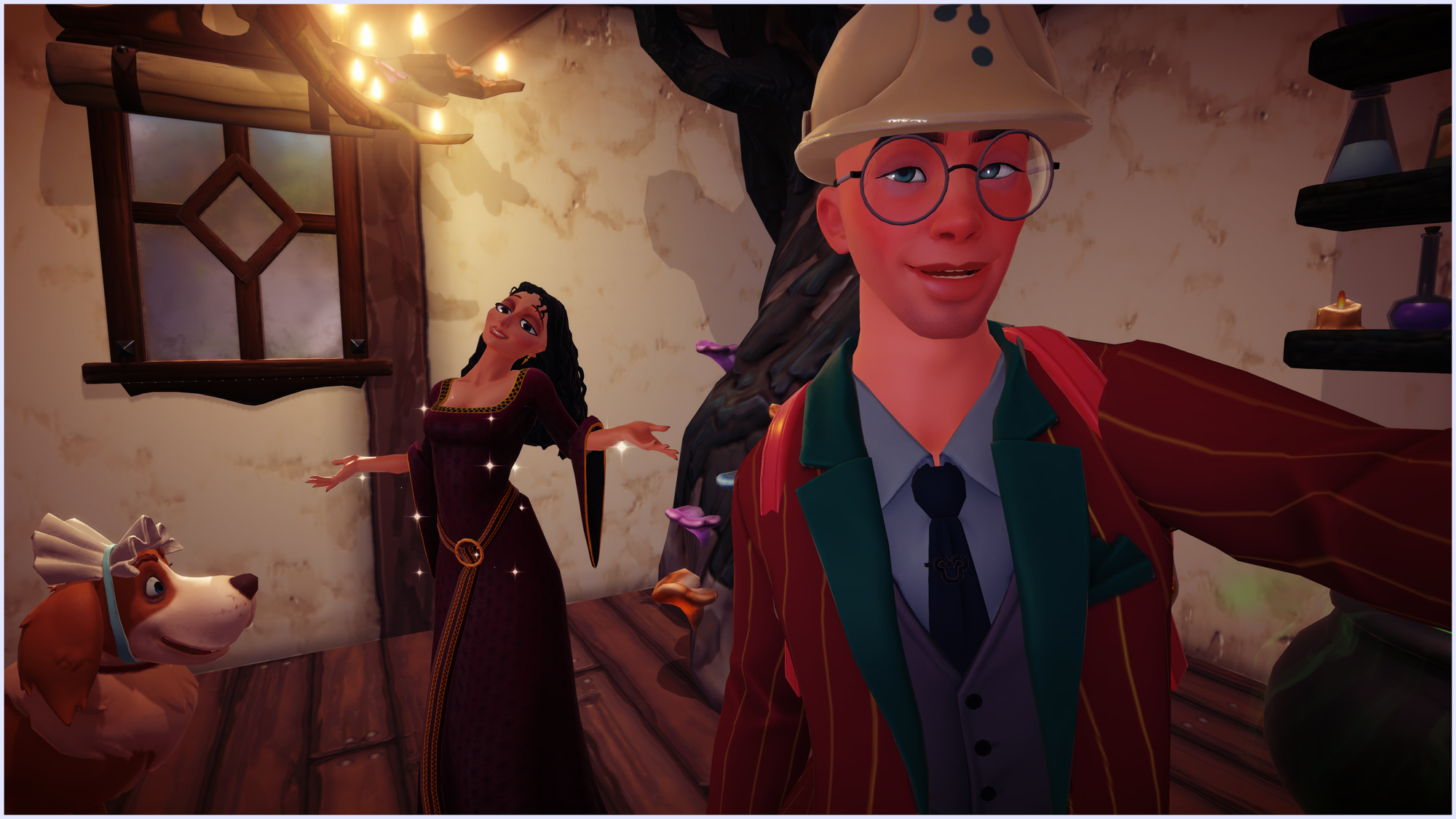
The Valley's antagonistic and morally complex characters are designed to unsettle. Some are domineering or dismissive, others manipulative or emotionally controlling, while others rely on sarcasm, intimidation, or entitlement to maintain a sense of power. Players often have strong emotional reactions to these characters, ranging from irritation to outright aversion.
These reactions are rarely random.
Jung described projection as the unconscious process of attributing our own unacknowledged traits to others. Characters who evoke disproportionate discomfort often reflect qualities that exist internally but remain tightly constrained or heavily monitored. This does not imply a desire to behave harmfully, but rather the presence of emotional energies that were deemed unsafe or unacceptable in earlier contexts. Encountering these traits externally can activate old patterns of judgment or avoidance.
Research on shame, particularly the work of Brené Brown, suggests that we are most reactive to behaviors in others that trigger our own internalized shame. The intensity of our response often signals proximity to something unintegrated within ourselves.
Dreamlight Valley doesn’t require players to resolve their reactions. It allows them to be noticed and held while remaining in a relationship with the characters.
Relationship as a Method of Understanding
Rather than reframing its villains as misunderstood heroes or moral lessons, Dreamlight Valley allows them to remain complex and flawed participants in the shared environment. Over time, players learn how these characters operate, what motivates their behavior, and how they respond to consistency, limits, and engagement. Scar strives to rule the Valley, Mother Gothel frames every action as just a way to protect everyone, and Ursula wants to make a deal with everyone she speaks to.
This mirrors effective shadow integration, which unfolds through relationship rather than suppression. In IFS terms, this process involves developing Self-energy—the capacity to approach all parts with curiosity, compassion, and calm rather than judgment or fear. Understanding develops through sustained contact, not confrontation.
- Some characters rely on manipulation to maintain safety.
- Some rely on dominance to secure resources or recognition.
- Some rely on emotional control to manage fear of abandonment.
- Some rely on distance or cynicism to protect vulnerability.
These patterns are exaggerated for narrative clarity, but the emotional logic beneath them is familiar. Engaging with these characters builds tolerance for complexity and allows players to remain present without collapsing into moral judgment or denial.
What the Nervous System Practices Through Engagement
Shadow material is often paired with shame responses, which narrow attention, heighten defensiveness, and reduce reflective capacity. Stephen Porges' Polyvagal Theory describes how our autonomic nervous system constantly scans for safety or threat, shaping our capacity for connection and reflection. When we encounter triggering material in a state of sympathetic activation (fight/flight) or dorsal shutdown (freeze/collapse), integration becomes nearly impossible.
In Dreamlight Valley, interactions with antagonistic or unsettling characters take place in a regulated, low-threat environment. The game's cozy aesthetic and predictable mechanics help maintain what Dan Siegel calls the window of tolerance—the zone of nervous system activation where we can process difficult emotions without becoming overwhelmed or shutting down.
Players learn to notice irritation without escalating it, to maintain boundaries without severing connection, and to remain grounded even when discomfort arises. These experiences matter because they teach the brain that difficult emotional states can be tolerated without triggering danger or loss of control.
Through repetition, these interactions create what neuroscience describes as new neural pathways—emotional muscle memory that expands the range of available responses beyond suppression or explosive reaction.
Repairing Internal Relationships Through Practice
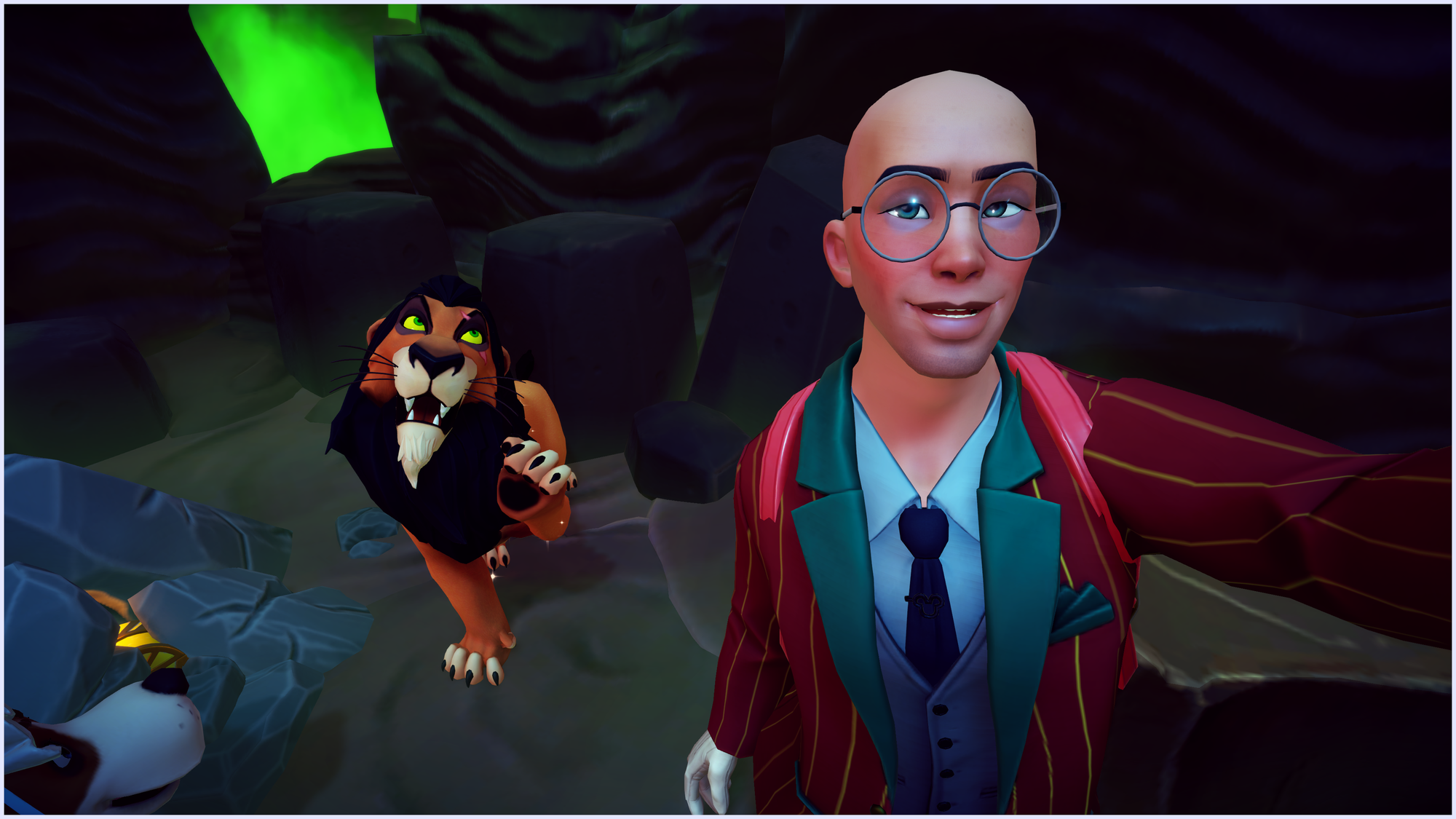
Helping a morally complex character with a task rehearses engagement without self-abandonment. Working alongside domineering or dismissive figures rehearses steadiness in the presence of power. Navigating guilt-inducing or manipulative dynamics rehearses boundary-setting that does not rely on withdrawal.
IFS describes this process as developing a new relationship between the Self and its protective parts. Rather than exiling these parts or being overwhelmed by them, integration involves witnessing their origins and functions with compassion.
Over time, these rehearsals translate inward:
- They appear as curiosity rather than self-attack when anger surfaces.
- They appear as discernment around control urges rather than panic.
- They appear as compassion for fear without allowing it to dominate behavior.
Shadow parts soften when they’re met with attention instead of exile. As Jung observed, "One does not become enlightened by imagining figures of light, but by making the darkness conscious."
Reframing Difficult Emotions as Information
As players spend time with the Valley's villains and morally complex characters, a gradual shift can occur. Discomfort begins to register as information rather than a threat. Emotional reactions are experienced as signals that carry context rather than evidence of failure.
This reframe aligns with contemporary emotion-focused approaches, which view emotions as adaptive systems that developed to communicate important information about our needs, boundaries, and values. The antagonistic figures in Dreamlight Valley function as systems shaped by fear, loss, and unmet needs. Internal shadow parts operate in much the same way. When these parts are approached with curiosity rather than condemnation, their intensity often diminishes, making room for choice and flexibility.
Shadow Integration Within Inner Child Work
Inner child work often emphasizes softness, play, and care—all of which are essential components of healing. At the same time, many protective strategies developed alongside the inner child in response to unmet needs or unsafe environments. Strength, vigilance, control, and emotional distance once served important purposes and deserve acknowledgment rather than erasure.
In IFS, these protective parts are sometimes called managers (who work to prevent pain) and firefighters (who react when pain breaks through). Both developed in service of the vulnerable, younger parts they protect. Healing doesn't require eliminating protectors—it requires helping them trust that the Self can now handle what once felt unbearable.
Dreamlight Valley allows players to practice holding gentleness and firmness simultaneously, cultivating care alongside discernment and understanding alongside accountability. This balance supports integration rather than polarization.
Why This Work Matters
Many people feel hesitant to engage with their shadow because understanding feels synonymous with moral compromise or loss of control. Dreamlight Valley offers an alternative experience in which complexity can be explored without harm and difficult parts can be acknowledged without taking over.
Through repeated engagement with the Valley's villains and morally complex characters, players practice staying connected to themselves even when internal experiences feel uncomfortable or contradictory. The work supports a fuller sense of self—one that can hold complexity without fragmenting.