Clearing the Fog: Why Revealing the Map Feels So Calming

There's a unique satisfaction that comes from watching fog lift off a game map. Not the dramatic fog of a horror game, thick with threat, but the gray of unexplored territory in an open-world game. The kind that says: you haven't been here yet. In Avatar: Frontiers of Pandora, this fog blankets Pandora's vast wilderness until you move through it, and the simple act of clearing it offers something that goes deeper than completionism.
For me, nothing calms and grounds me quicker than the task of defogging a map; the methodical planning, route plotting, and discovery of new biomes. This is something many players find tedious, a chore to rush through on the way to the real content. But for autistic players especially, it can feel like relief. And that feeling is worth understanding, both as lived experience and as a window into how regulation actually works.
When the Unknown Becomes Known
Ambiguity is expensive. Not metaphorically expensive, but cognitively expensive. An autistic brain often tracks open variables with unusual persistence, holding unresolved information in active memory rather than letting it fade into the background. This aligns with monotropic processing styles, where attention flows deeply into fewer channels rather than diffusing across many. When something remains unresolved, it doesn't just sit quietly in the periphery. It demands continued allocation of limited cognitive resources.
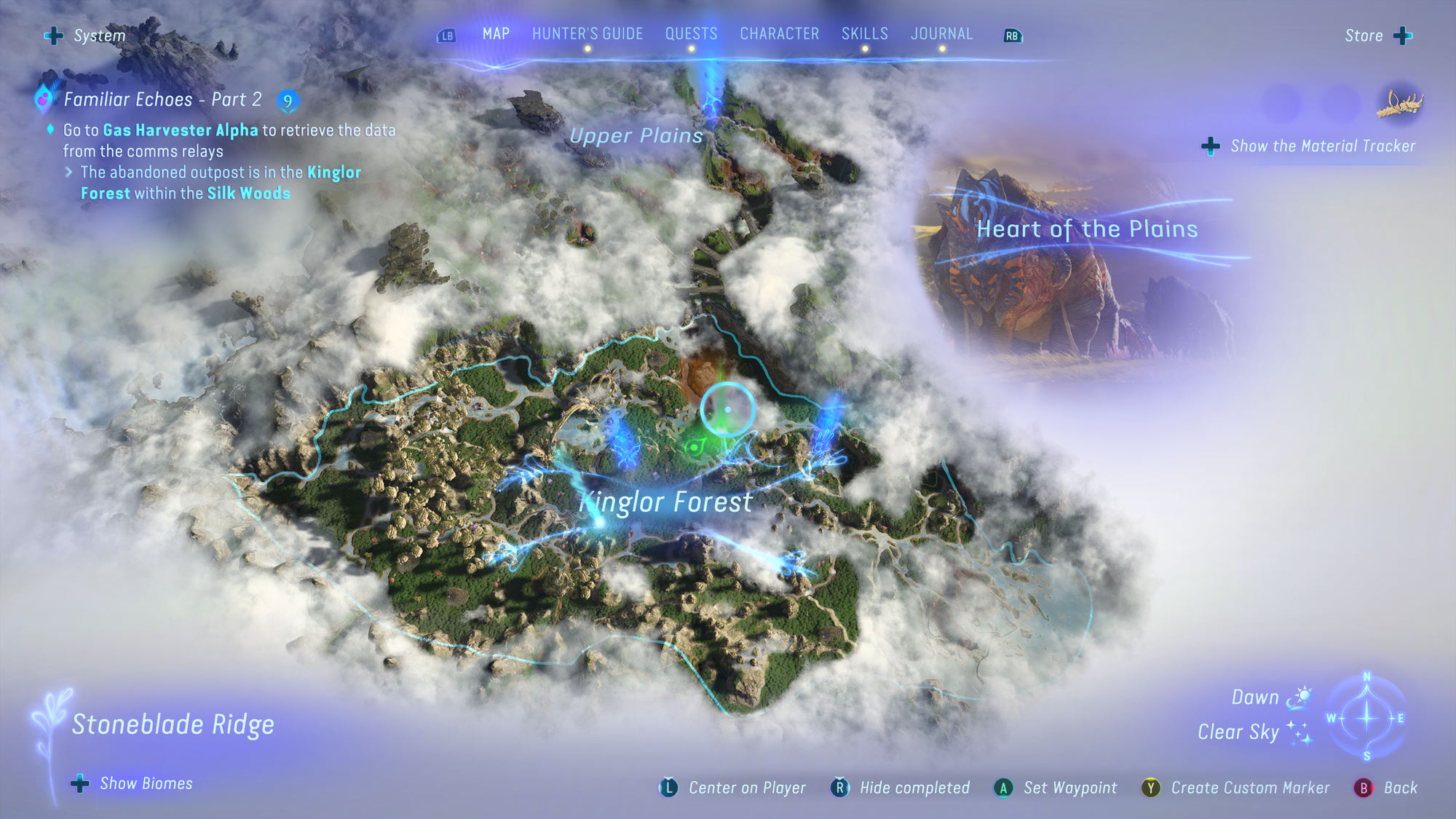
When you clear fog from a map, you close an open loop. The unknown becomes known. That section of the world shifts from "requires monitoring" to "resolved." The brain can finally stop tracking it.
This isn't about obsessive map-clearing or compulsive completionism. It's about how an autistic nervous system responds to resolution. A revealed map is a settled question. Clinically, this is completion reducing cognitive load. Experientially, it's the relief of finally being able to let something go.
From Chaos to Pattern
Before the fog lifts, a map is noise. Shapes without meaning, boundaries you can't parse. After you've moved through the world, it becomes something legible. Rivers connect. Cliffs make sense. The scattered fragments organize into geography you can hold in your head.
Pattern recognition is often a core autistic strength, and when visual disorder resolves into coherence, it registers as deeply satisfying. This isn't trivial. The shift from unstructured to structured information reduces cognitive noise and supports a sense of environmental predictability, which polyvagal theory identifies as a key ingredient for nervous system safety. When the world becomes parseable, the body can settle.
There's a reason so many autistic people are drawn to maps, taxonomies, and organizational systems. They turn the overwhelming into the manageable. Fog-clearing is that same process made interactive, and it provides real-time feedback that the world is becoming more knowable.
The Comfort of Predictable Loops
Travel. Reveal. Complete. The rhythm of exploration in Frontiers of Pandora follows a clear, repeatable structure. You know what success looks like. You know the rules. And crucially, you know there won't be a sudden shift in expectations or an ambiguous social judgment about whether you did it right.
For autistic players who spend significant energy navigating unclear social expectations, unwritten rules, and systems that don't explain themselves, this kind of predictability is profoundly regulating. There's no guesswork. No hidden criteria. No moment where someone's expression shifts and you have to decode what went wrong. Just movement through space, and the map responding exactly as it should.
Predictability functions as a safety signal. When the environment behaves consistently, the nervous system doesn't have to remain on alert for unexpected threats or shifting parameters. This is why structured, rule-governed activities often serve a regulatory function for autistic individuals. The loop is honest in a way that social systems rarely are, and that honesty allows the body to rest.
Progress That Stays
One of the frustrations of life with autism is that effort doesn't always produce legible results. You can mask perfectly and still miss something invisible. You can follow every rule you were given and discover there were other rules no one mentioned. Progress in social and professional spaces can feel unstable, dependent on variables you can't see or control.
Games like Frontiers of Pandora offer something different. When you reveal a section of the map, it stays revealed. Your effort is recorded permanently. It doesn't erode because someone changed their mind or because you missed an unspoken expectation. The world acknowledges what you did, and that acknowledgment persists.
Clinically, this provides contingent, unambiguous feedback, something autistic clients often report lacking in daily life. Visible, permanent progress is a form of validation that doesn't require interpretation. It says: you were here. You did something. And the record of it won't shift beneath your feet. For clients who have learned to distrust feedback or who struggle with imposter syndrome rooted in inconsistent external responses, this kind of stable acknowledgment can be quietly corrective.
Mastery Without Performance
There's no wrong way to explore a map. You can take the efficient route or wander aimlessly. You can clear fog in concentric circles or zigzag across the terrain. The game doesn't punish you for inefficiency. It doesn't grade your style. It simply lets you move, and the fog lifts in response.
This is mastery without performance pressure. You know what competence looks like, you can reach it reliably, and no one is evaluating how you got there. For autistic players who've internalized years of being told their approach is wrong, too slow, too rigid, or too unconventional, this kind of forgiving structure can feel almost foreign.
The clinical value here is significant. Many autistic individuals carry performance anxiety rooted not in inability but in repeated correction of their methods. They've learned that even successful outcomes don't protect them from criticism of process. A space where the outcome matters and the method doesn't offers something reparative: evidence that competence can exist without surveillance.
Purposeful Movement, Manageable Scope
There's a difference between aimless wandering and purposeful exploration. Fog-clearing invites the second kind. You're moving with intent, but the intent is gentle. You're not rushing toward a deadline or navigating a social situation with hidden stakes. You're simply filling in the edges of a world that behaves predictably.
This kind of focused movement keeps you engaged without pushing you toward overwhelm. In clinical terms, it sits within the window of tolerance, that zone where the nervous system can stay regulated while still being active. You're not bored, but you're not flooded. You're tracking something concrete, and the feedback is immediate and clear.
For autistic players who struggle with tasks that are either too vague or too demanding, fog-clearing hits a sustainable middle ground. The goal is obvious. The path is self-directed. The sensory and cognitive input remains manageable. This is what a well-matched challenge looks like, and it's worth noting how rarely daily life provides it without significant self-advocacy or accommodation.
You Set the Pace
No one tells you when to stop. No timer ticks down. No NPC shifts impatiently while you process. You choose the direction, the speed, and the stopping point. If you want to spend an hour revealing a single region, you can. If you need to pause and let your brain settle, the game waits.
This autonomy matters tremendously. Autistic regulation often depends on controlling pace and input. When you're the one deciding how fast to go and when to rest, the nervous system has room to calibrate. It's not bracing for someone else's timeline. It's moving at its own rhythm, and that rhythm is allowed to vary.
External pacing demands are one of the biggest exhaustions of navigating a neurotypical world. Clinicians working with autistic clients will recognize how often dysregulation stems not from the task itself but from externally imposed timing. Games that let you set your own tempo offer something restorative precisely because they remove that pressure. They model what accommodation could look like if it were built into the environment rather than requested as an exception.
A World You Can Hold
Pandora is vast, but it's not infinite. The fog has edges. The map has boundaries. You're not trying to comprehend something unbounded and chaotic. You're working within a contained space where confusion is temporary and resolution is guaranteed. Eventually, you will see the whole thing. Eventually, it will all make sense.
This containment offers a kind of cognitive safety. The world is finite and knowable. It doesn't shift its rules when you're not looking. It rewards patience with clarity, and that clarity is inevitable. You don't have to wonder if you're capable of understanding it. You just have to keep moving, and the understanding comes.
For a brain that often encounters systems too complex, too unstable, or too poorly explained to fully grasp, a world that promises eventual coherence is genuinely soothing. Therapeutically, this mirrors the value of bounded, structured interventions. When clients know the scope and can trust the process, they can tolerate uncertainty in the short term because resolution is guaranteed in the long term.
Regulation, Not Avoidance
It would be easy to dismiss fog-clearing as avoidance. A way to escape the real world and its real demands. Autistic people are used to having their coping strategies pathologized, their interests called obsessions, their need for downtime framed as withdrawal.
But what's happening during this kind of play isn't avoidance. It's active regulation. The brain is settling into structure. The nervous system is responding to predictability, clarity, and the absence of ambiguous threat. This is what regulation looks like when the environment actually supports it.
Clinicians should note the difference between avoidance that prevents engagement and regulation that enables it. Many autistic clients use structured, predictable activities to restore capacity for less predictable demands. Fog-clearing in a game isn't a retreat from life. It's a resource that makes returning to life more sustainable. The calm comes from structure, safety, and clarity, not from escaping reality. When we pathologize these strategies, we remove tools that work and offer nothing in their place.
If you find yourself drawn to map-clearing, exploration, or the rhythm of revealing an unknown world, you're not wasting time. You're not being rigid or obsessive. You're meeting a real need in a way that actually works. Pay attention to how it feels when the fog lifts. That settling in your chest has a name, and it's worth honoring.
And if you're a clinician, ask your autistic clients about the games they return to. The mechanics they find soothing. The loops they don't get tired of. There's clinical information in those preferences, and there's validation in taking them seriously.