Hammer, Pour, Play: Finding Ground in Fable’s Small Jobs

The Rhythm Between the Quests
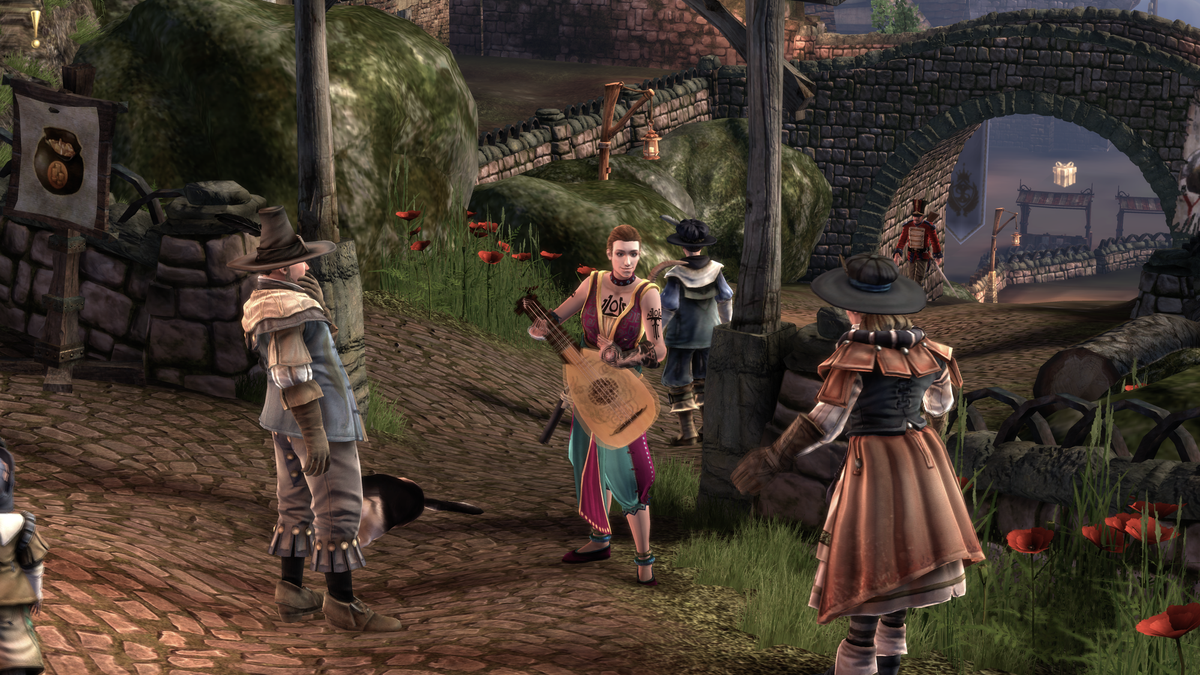
Between battles and moral choices, Fable II and Fable III offer something unexpectedly grounding: work. Not quests with heroic work–ordinary labor. Blacksmithing, bartending, woodcutting, and lute playing. Each task follows a simple pattern: press the right button at the right time, keep the rhythm, stay focused. Do it well, and the gold trickles in.
These job minigames are humble, easily overlooked parts of Fable’s world. But for players who know what it’s like to live in constant mental noise, whether from trauma, anxiety, ADHD, or sensory overload, they can become something more than ways to earn money. They can become tools for grounding.
The Work That Keeps You Here
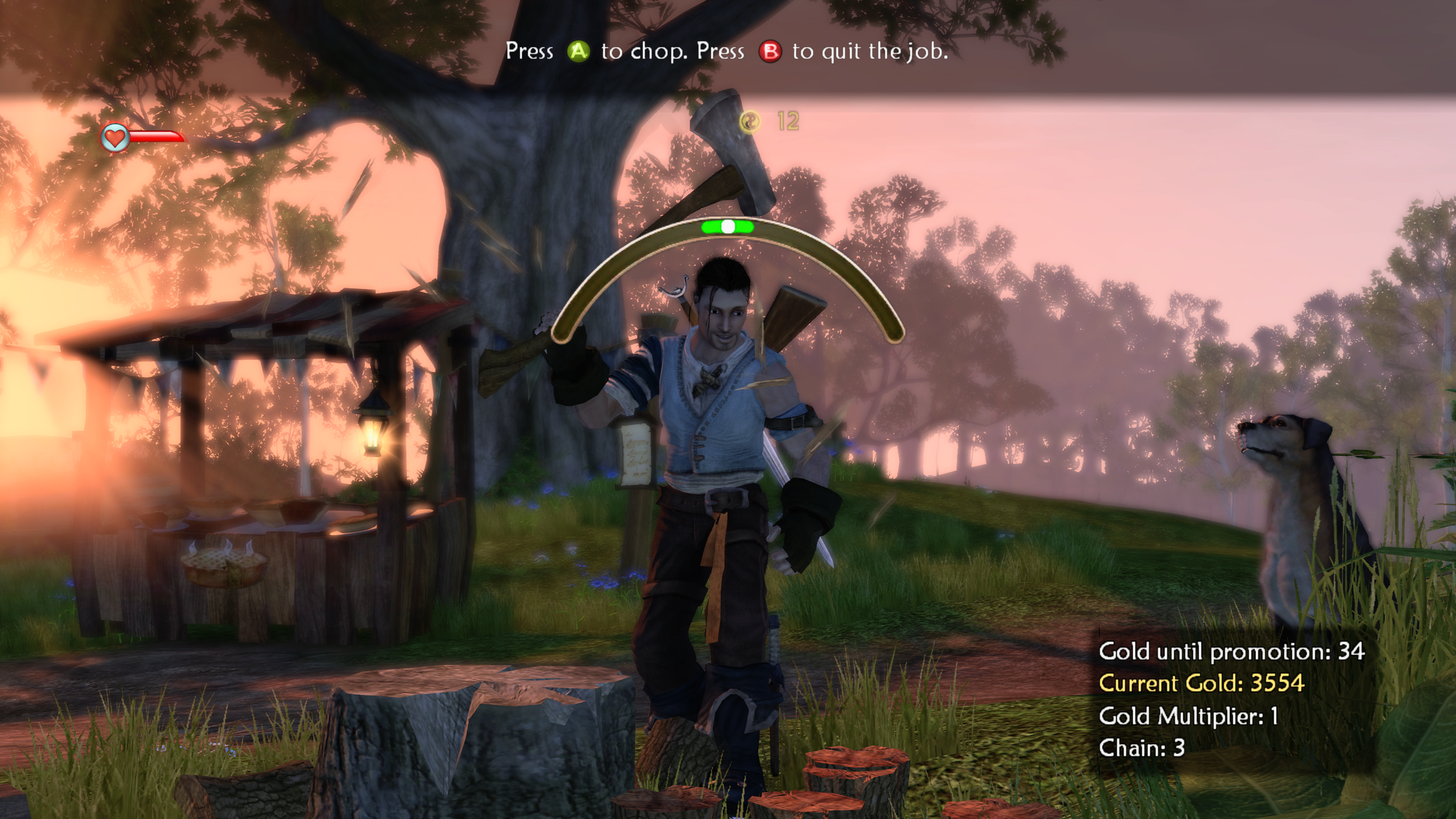
The first time you swing the blacksmith’s hammer or split a log in the forest, it’s just a means to an end. You need gold for a house, a sword, or a revolution. So you follow the rhythm: hammer, quench, repeat. Or raise the axe, breathe, swing, and watch the wood fall cleanly apart. But something important happens in that repetition. Your breathing steadies. Your focus narrows. The noise of the world–the crowds, quests, and moral choices–fades into the tempo of work.
That state of rhythmic concentration mirrors regulation through rhythm. Repetitive, predictable tasks engage the body’s natural calming systems. They give the mind something to anchor to. Like walking, knitting, or washing dishes, these small jobs turn attention into safety.
For players who live with hyperarousal or overstimulation, that rhythm becomes a lifeline. The sound of the hammer’s strike, the thunk of the axe, or the satisfying pour of a perfectly filled mug provides an auditory metronome for the nervous system–something to sync with when inner or outer chaos takes over. These are moments of bottom-up regulation: you don’t talk yourself calm; you let your body find its own pace again.
Grounding Through Repetition
Trauma and anxiety pull attention outward–to threat, to what might happen next, and preparing for it. Grounding pulls it back to the present. Fable’s minigames do exactly that. They force you to synchronize with the rhythm of the moment, to stay with what’s happening now.
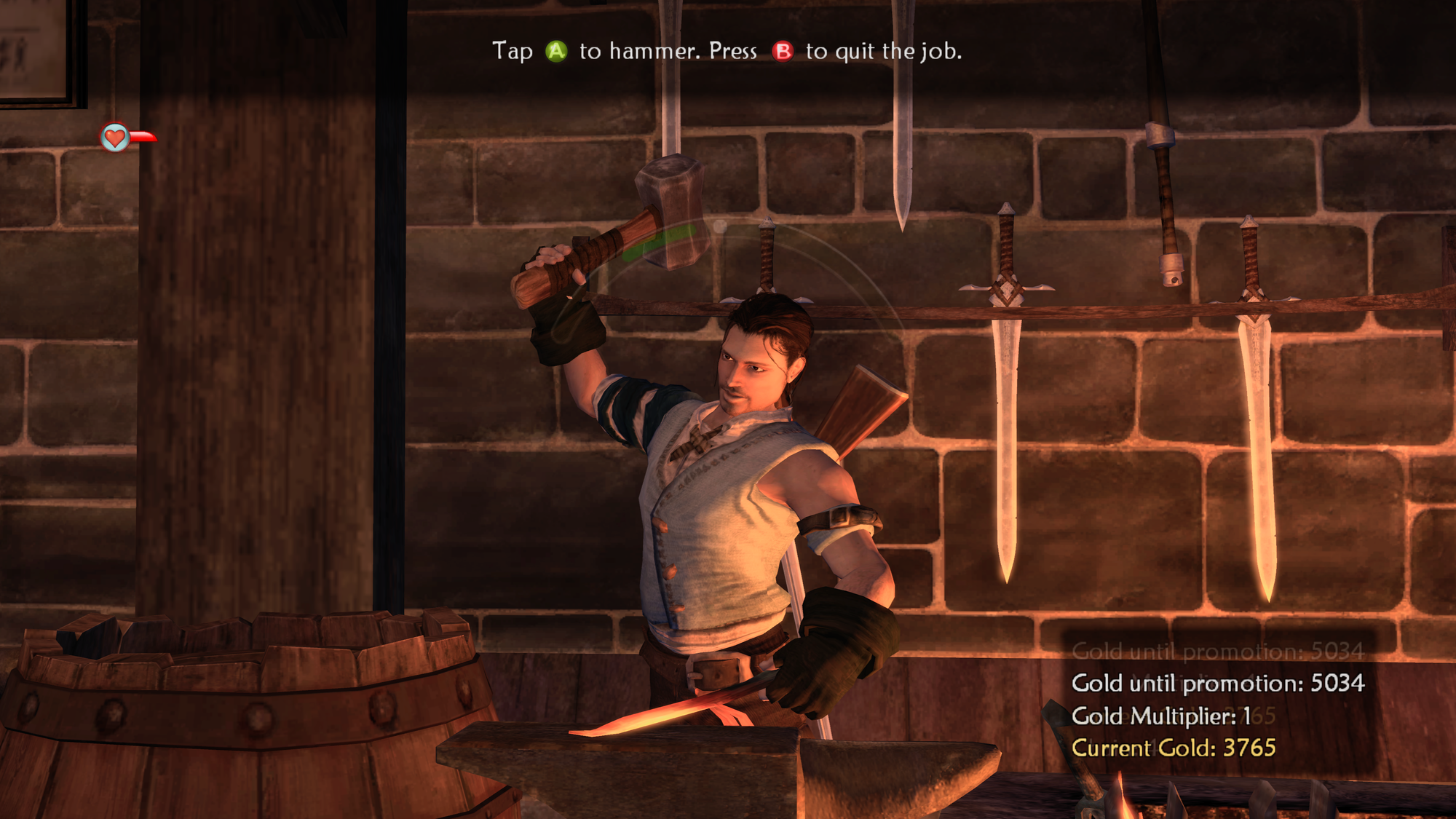
Miss a cue and you lose your streak. Rush, and the rhythm collapses. The only way forward is steady, mindful presence. The hammer falls, the mug fills, the axe lands, the lute note plays. Each action brings a small sound, a flash of light, a beat of completion. It’s not flashy, but it’s enough to remind the nervous system: you’re here, and you’re safe.
For autistic and ADHD players, this kind of repetition can be especially regulating. The clear feedback, sensory rhythm, and structured focus create an environment where engagement doesn’t require masking or multitasking. The jobs’ simplicity becomes a kindness: no dialogue trees, no split attention, no emotional ambiguity. Just rhythm, response, and reward.
And there’s comfort in that sameness. For many autistic people, repetition isn’t boredom, it’s peace. Eating the same foods, wearing the same shirt in multiple colors, stimming with a familiar motion, all of these are ways to reduce uncertainty and maintain internal balance in a world that often feels unpredictable or too much. Predictable repetition helps stabilize sensory input and lowers cognitive load. It creates continuity, a thread of sameness in a world of constant change.
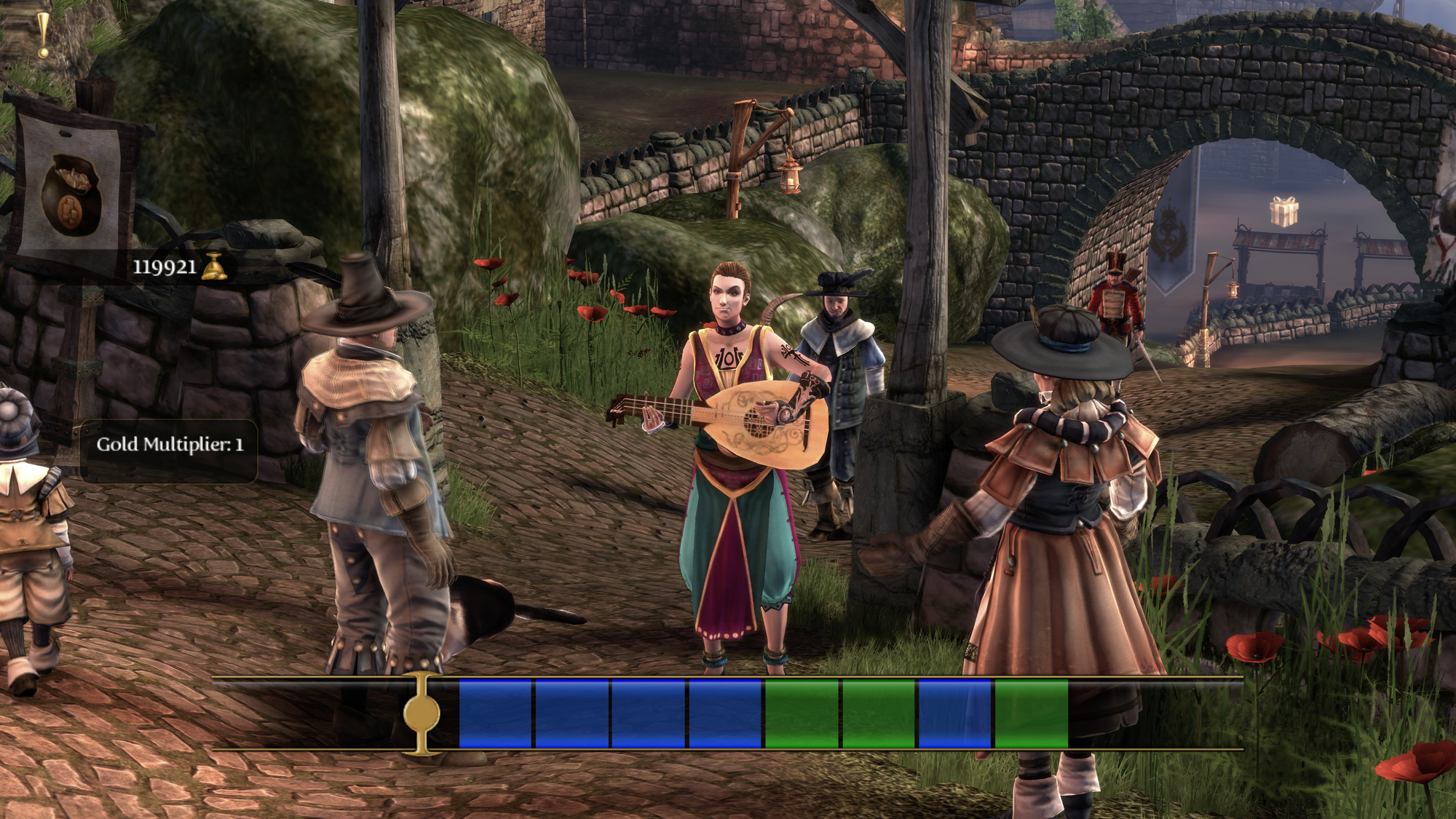
Fable’s job minigames mirror that sense of safety in the familiar. Every hammer strike, every axe swing, every pint poured is a small reaffirmation of predictability. You know what’s coming next. You know what success feels like. And that knowledge–the safety of knowing what to expect–is a form of rest.
When the World Feels Too Big
In both Fable II and Fable III, the world can feel heavy. Choices carry moral weight; wars and revolutions loom. In the midst of that, the game offers these small, rhythmic tasks like handholds. They’re not glamorous, but they’re safe. They let the player rest in competence when everything else feels uncertain.
That mirrors a core principle of trauma recovery: the need for predictability. After chaos, the nervous system craves structure. These minigames deliver it in clean, mechanical, and forgiving fashion. You don’t have to save the world; you just have to keep the beat.
Players can use them the same way therapists might recommend repetitive grounding behaviors: organizing objects, listening to rhythmic music, cooking, or walking a familiar path. The jobs in Fable may exist for gold, but they’re also invitations to reestablish rhythm after rupture.
And unlike most video game side quests, these tasks don’t demand narrative progress. They don’t ask you to win or perform. They ask you to show up, stay steady, and make something small–but make it well. And that's what grounding is: choosing steadiness when everything else feels like motion.
Mastery as Regulation
The game reinforces another therapeutic concept: mastery. As you improve at a job, the pay increases, the pace quickens, and your confidence grows. That sense of progress is visible, measurable, and earned, and can be stabilizing for players whose real lives feel uncertain or uncontrollable.
In therapy, small achievable tasks form the foundation of emotional regulation. Success in something repetitive and manageable creates momentum for larger challenges. In Fable, the same is true: before you rebuild a kingdom, you build a rhythm. Before you confront moral complexity, you learn steadiness.
For autistic and ADHD players, that mastery loop is especially rewarding. It offers dopamine and focus without chaos. The increasing tempo of each job mirrors how some neurodivergent minds find flow, through intensity that’s structured, predictable, and embodied. The faster the hammer falls or the mug is filled, the more focused you become. In that rhythm, overstimulation turns into motion; energy finds direction.
The player learns, perhaps without realizing it, that grounding and achievement can coexist. You don’t always need a quest. Sometimes you just need a hammer or an axe.
Play as Presence
There’s something quite restorative about these digital chores. They remind players that work–mundane, rhythmic, embodied work–can be a form of self-care. In a world obsessed with progress and spectacle, Fable slips in a simple truth: regulation is found in the ordinary. Healing often is too.
When the mind spirals or the story feels too heavy, step into the rhythm. Swing the hammer. Pour the drink. Chop the wood. Play the note. Let the body remember what steadiness feels like.