The Person Who Made Us Possible: God of War and the Loss of the Bridge

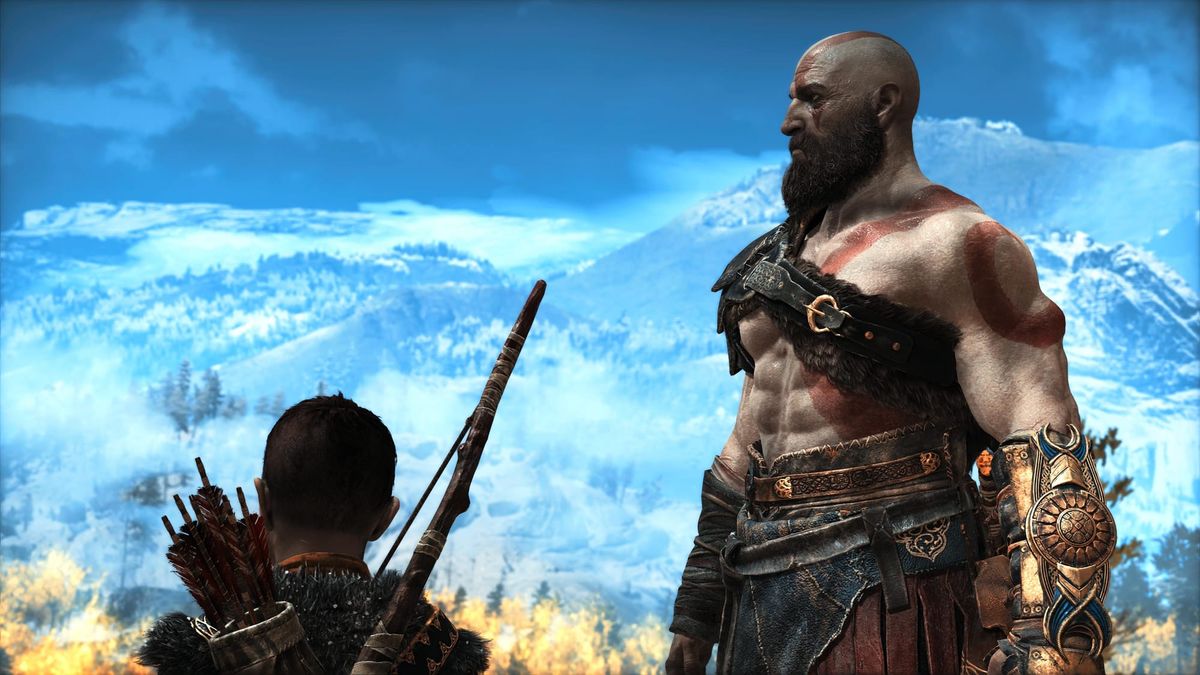
Processing relational grief through Kratos and Atreus
My father and I are learning how to love each other without my mother. We always loved each other—that was never in question. But for forty-three years, my mother did the work of translating that love into connection. My father is a stoic Vietnam veteran, the strong silent type who learned early that emotions were liabilities. I was a child and young adult who felt everything intensely and couldn't hide it, no matter how hard I tried—and I did try, desperate to mold myself into something my father would find easier to understand. The mismatch was painful for both of us.
My mother softened his edges before they reached me. She helped him understand the parts of me that confused him—the big feelings, the sensitivity, the ways I moved through the world that didn't match his framework. She created the emotional space where our relationship could exist without the constant friction of two people who don't quite speak the same language trying to communicate directly.
Testosterone changed some of this. I started gender affirming hormone therapy two and a half years ago, and my emotions are much more muted now. The intensity that used to overwhelm me has quieted to something more manageable. In some ways, I understand my father better now—what it's like to feel less, to have a more regulated internal experience. But that shift happened long after I'd goven up on trying to connect with my dad.
I didn't fully see that labor until she was gone. Until my father and I were standing in a room together, both grieving, both reaching toward each other, and discovering that the person who made reaching easy was the one we'd lost.
Six years ago, I played God of War and saw my relationship with my father reflected in Kratos and Atreus. The emotional distance. The struggle to connect across fundamentally different ways of being in the world. The love that existed but couldn't quite find its expression. I understood something about us through that game.
I never imagined I'd return to it after my mother's death and find myself inside the story rather than observing it—my father and I on our own grief journey, trying to scatter her ashes and figure out who we are to each other now.
The Grief You Didn't Know You Were Preparing For
God of War opens with an ending. Faye is already gone. The pyre is already built. You step into the story after the acute loss, when the immediate shock has passed and the real work begins—the work of living in a world that has fundamentally changed.
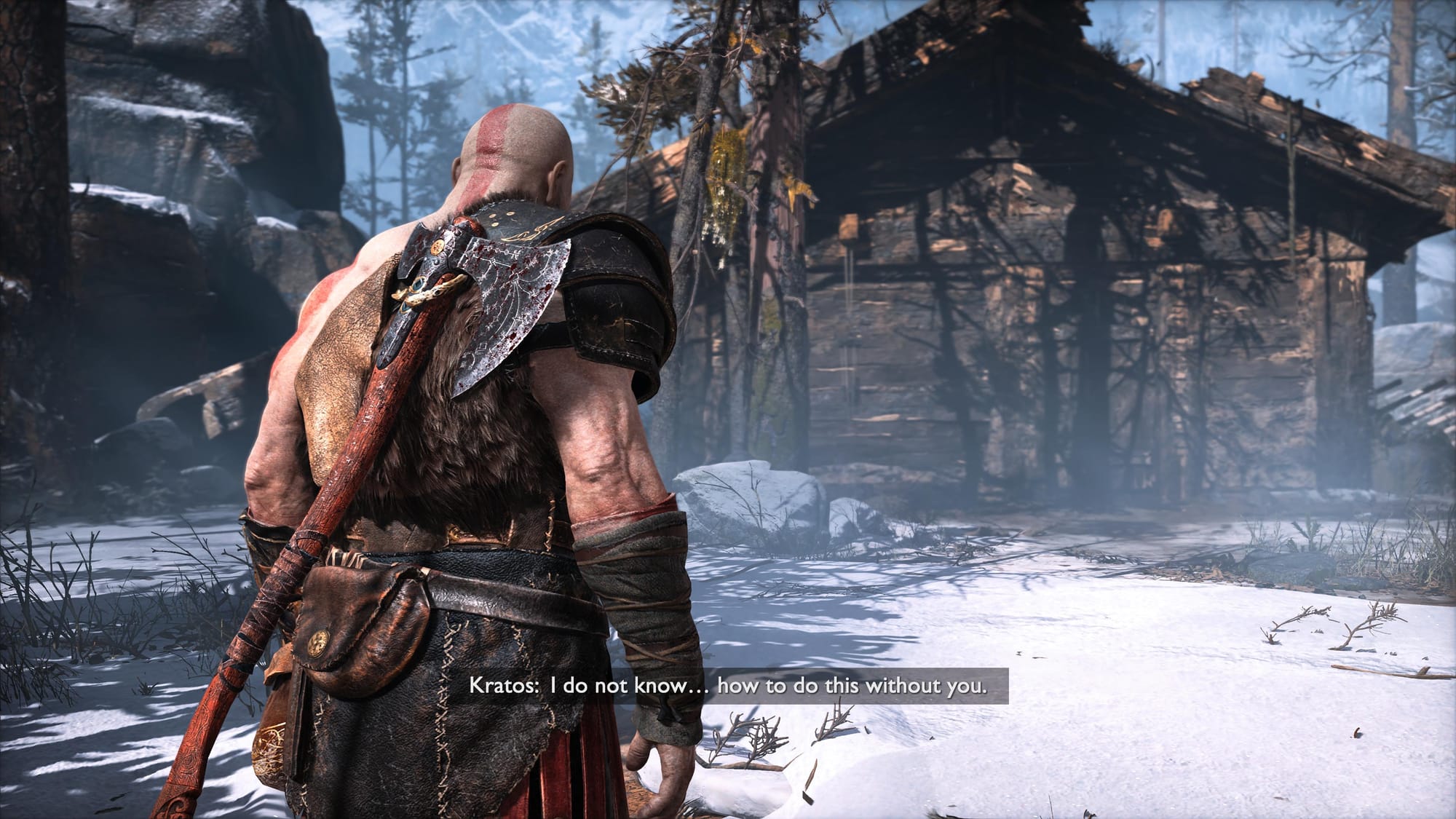
Early in the game, after the first brutal encounter with Baldur, Kratos stands over the unconscious god and says quietly, almost to himself, almost to Faye: "I do not know how to do this without you."
It's one of the rawest moments in the entire game. Kratos—the god-killer, the man who destroyed Olympus, who has survived horrors that would annihilate most beings—admits that this, being a father alone, is beyond him. Not because he lacks strength or skill, but because Faye wasn't just his partner in parenting. She was the one who knew how to reach their son. Without her, he's adrift.
This narrative choice is more clinically accurate than most grief stories. Acute grief—the initial intense shock and pain—typically peaks in the first six months. But what researchers call "integrated grief," the long process of reorganizing your life and identity around the loss, can take years. The game skips past the part most stories focus on and goes straight to the harder question: what happens next? Who are we now?
Kratos and Atreus are on a pilgrimage to the highest peak in all the realms to scatter Faye's ashes. It's their final promise to her, their last act of honoring who she was. But the journey isn't really about the destination. It's about two people who loved the same person discovering that they don't know how to love each other without her there to facilitate it.
Faye wasn't just Kratos's wife and Atreus's mother. She was the emotional center of the family system. Attachment research identifies this role clearly: the "secure base" from which other relationships can safely develop. When that base is removed, every other connection in the system becomes unstable.
The Translator is Gone
There's a specific kind of loss that happens when you lose the person who mediated your relationship with someone else. Attachment theorists call this "the auxiliary attachment figure"—someone who doesn't just have their own relationship with you, but actively facilitates your relationship with others.
My mother was that for my father and me. When I was struggling, she helped him understand what I needed. When he was frustrated, she translated his concern into language I could receive. She didn't just love us separately; she created the conditions under which we could reach each other.
The research on family relationship reorganization after loss describes exactly what happens when this kind of figure dies: existing relationships don't just continue with one person missing. They have to be fundamentally rebuilt. The pathways that existed before—the ones that ran through the deceased person—are gone. New direct connections have to be forged, often between people who never had to build them before.
But it's not just about communication. It's about care work—the hundreds of small ways my mother took care of my father that are now just... absent. The "traditional" woman who took care of her man is gone, and someone has to fill some of those gaps.
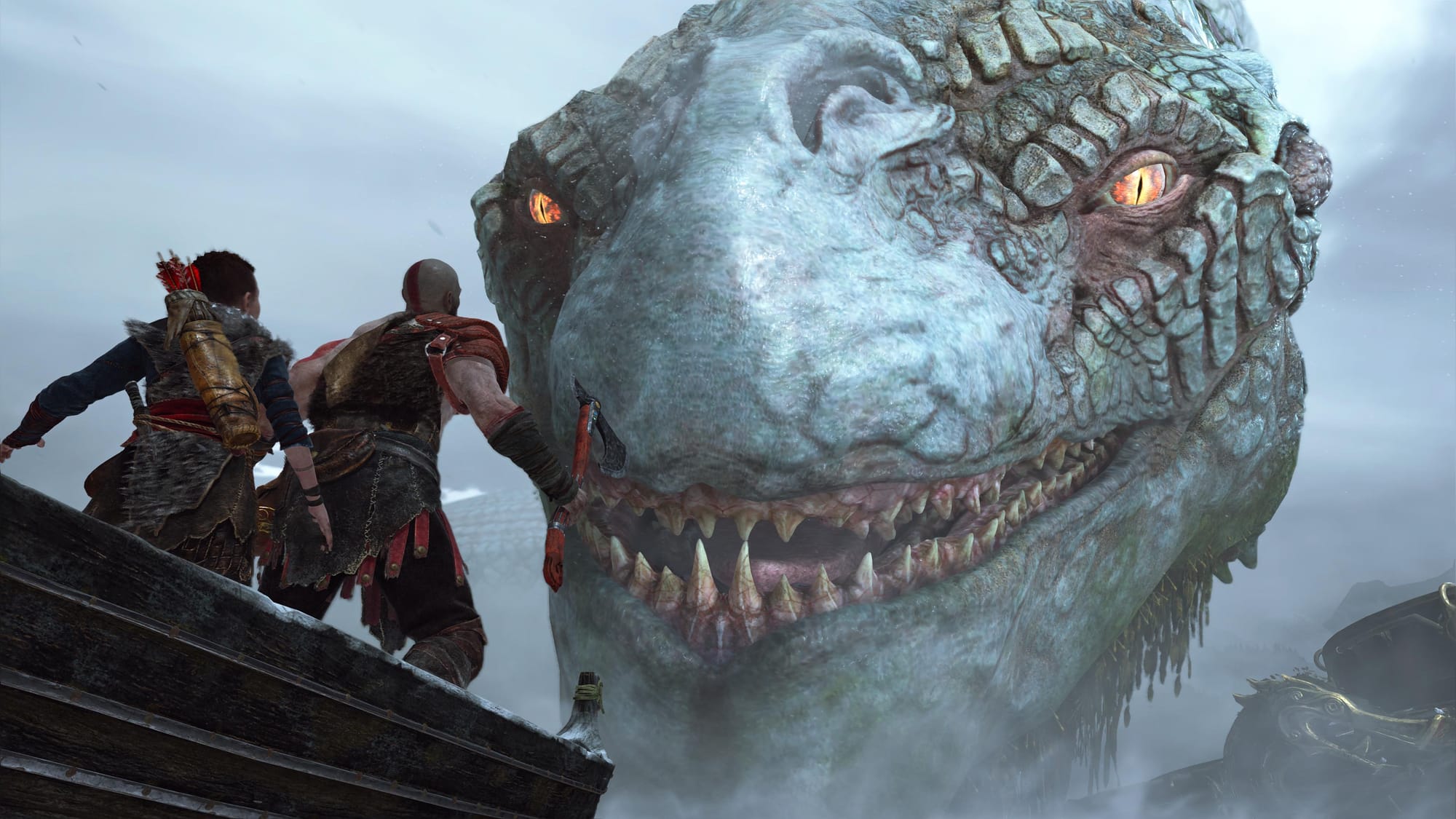
Kratos never says "I love you" to Atreus in the entire game. Not once. But he shows it constantly. He keeps his son fed, warm, and safe. He teaches him to hunt, to fight, to survive. He stands between Atreus and every threat. When Atreus is sick, Kratos walks through Helheim itself to find a cure. And as the game progresses, Atreus learns to reciprocate in his own ways—providing tactical support his father can't manage alone, reading the runes Kratos can't decipher, offering perspective when his father's trauma blinds him.
The game validates this as real love. Not lesser love, not incomplete love, but a legitimate language of care that doesn't require verbal declarations to be profound.
I still struggle with direct expressions of love—"I love you" doesn't come easily even now. But I can cook for my father. I can help him schedule appointments and take care of the logistical tasks that come after a death, manage the dog care, handle the small chores that used to be my mother's domain. These are the ways I know how to show I care, the language I can speak more fluently than emotional declarations.
Like Kratos and Atreus, my dad and I are learning to take care of each other in complementary ways. He's learning to ask for help with things he used to handle alone. I'm learning what he needs without being told. The reorganization isn't just emotional. It's practical, physical, tangible. We're learning not just how to talk to each other, but how to take care of each other in all the ways that matter.
God of War taught me that this is enough. That care work is love work. That showing up, doing the practical things, standing between someone you love and the threats they face—that counts. It counts deeply.
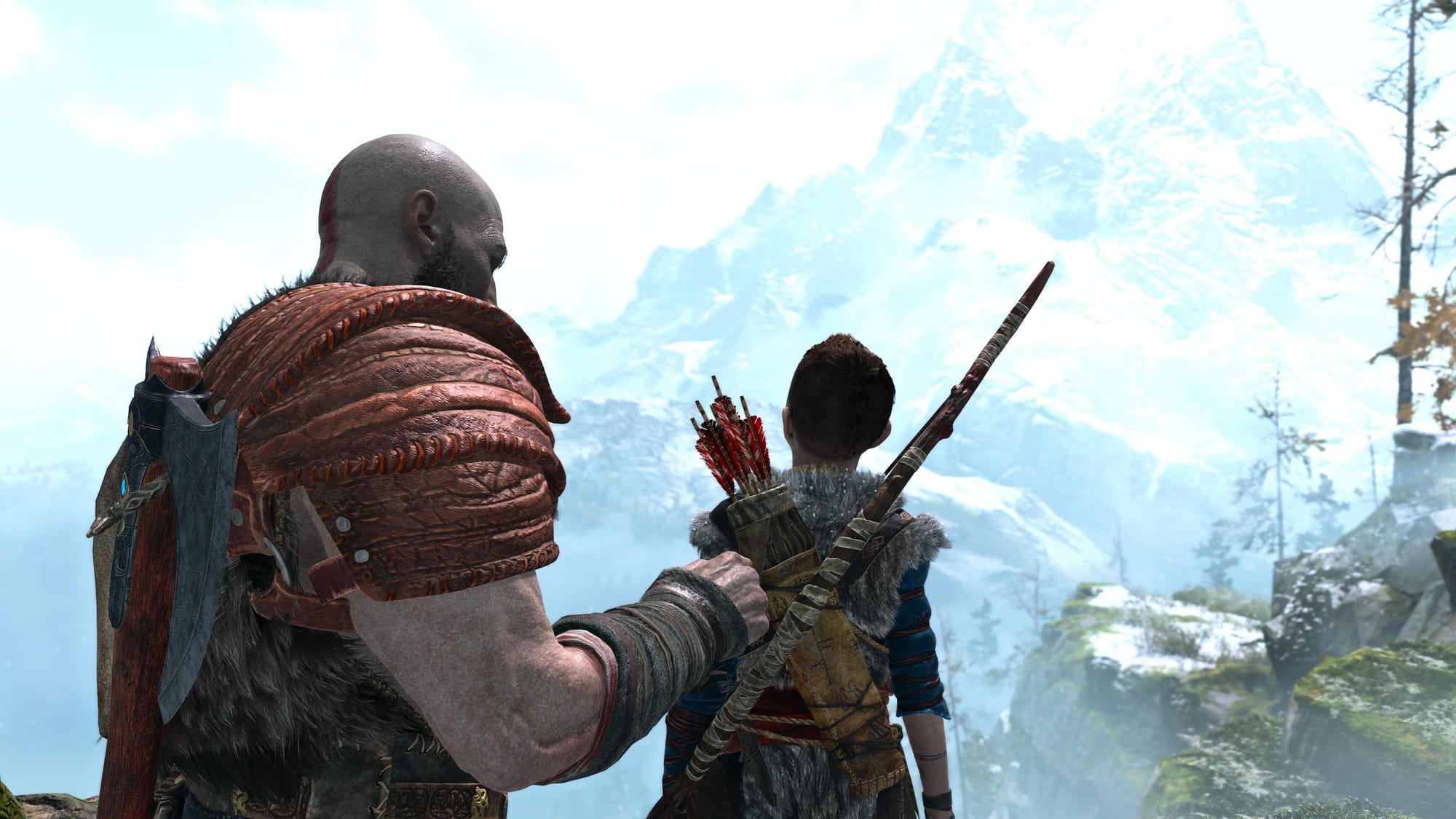
Watching Kratos struggle to comfort Atreus, I see this so clearly. He doesn't know how to do this. Not because he doesn't care—Kratos's love for his son is never in question. But because Faye was the one who knew how. She translated Atreus's needs into something Kratos could understand. She softened Kratos's responses into something Atreus could receive. Without her, they're both trying to speak a language they never had to learn fluently before.
There's a moment early in the game where Atreus is struggling with something, and Kratos reaches toward him—you can see him trying to decide whether to put his hand on his son's shoulder. The gesture almost happens. Then he pulls back. It's not that he doesn't want to offer comfort. It's that he doesn't trust himself to do it right without the person who used to guide that gesture.
I do not know how to do this without you.
I know that hesitation. I see it in my father and in myself now. The slight pause before we speak, the way we're trying to figure out how to reach each other without my mother there to translate. We're both reaching, and we're both uncertain, and the uncertainty itself is part of the grief.
I've said those same words to my mother, even though she can't hear them. I don't know how to do this without you either.
The Geometric Problem of Triangular Loss
Family systems theory describes something called "triangulation"—when a two-person relationship is mediated through a third person. It's often discussed as a dysfunction, a way of avoiding direct connection. But sometimes triangulation is adaptive. Sometimes the third person isn't creating distance; they're making connection possible between two people whose natural modes of relating don't align.
My mother wasn't preventing my father and me from having a direct relationship. She was providing the structure that let us build one at all. Without that structure, we have to start from scratch—and starting from scratch at 43, in the middle of acute grief, with decades of relational patterns built around her presence, is not simple work.
Dr. Robert Neimeyer, one of the leading researchers on meaning-making in grief, talks about "the reconstruction of the assumptive world"—how loss forces us to rebuild our understanding of who we are and how we relate to others. When the loss includes the person who structured your relationship with someone else, you're not just rebuilding your own sense of self. You're rebuilding the entire relational system.
The game shows this through gameplay, not just narrative. For much of God of War, combat requires Kratos and Atreus to work together—Kratos doing the heavy physical work while Atreus provides ranged support, distraction, and tactical information. They have to learn each other's rhythms, anticipate each other's moves, coordinate without explicit instruction.
But they're bad at it at first. Atreus fires arrows at the wrong moment. Kratos doesn't notice when his son is in danger. They miss cues, fail to synchronize, and frequently need to recalibrate. The growing fluency between them isn't automatic. It's earned through repetition, through failure, through the slow work of learning to read each other.
That's what my father and I are doing now. Learning each other's rhythms. Figuring out when to speak and when to be silent. Discovering what the other needs without the person who used to just know and help us know too.
The Survival Mechanism That Becomes the Problem
Kratos's emotional unavailability is the game's central tension. He's not cold because he doesn't care—he's cold because caring has historically gotten people he loves killed. His distance is a survival mechanism, born from a history of violence and loss so extreme that connection itself became dangerous.
Trauma research describes this pattern clearly. When attachment and threat have been paired repeatedly—when the people you love become the source of pain or when loving them puts them in danger—the brain learns to suppress attachment behavior as a protective mechanism. Emotional distance isn't a personality trait; it's an adaptation.
The problem is that survival mechanisms designed for one context rarely translate well to another. What protected Kratos in his previous life actively harms his relationship with Atreus in this one. The walls that kept him functional as the Ghost of Sparta prevent him from being the father his son needs.
Faye understood this about Kratos. She worked with it, around it, through it. She knew how to reach him when he withdrew. She knew how to draw him back into connection without triggering the defenses that kept him walled off. And crucially, she knew how to help Atreus understand his father—to see the love beneath the distance, to not take the withdrawal personally.
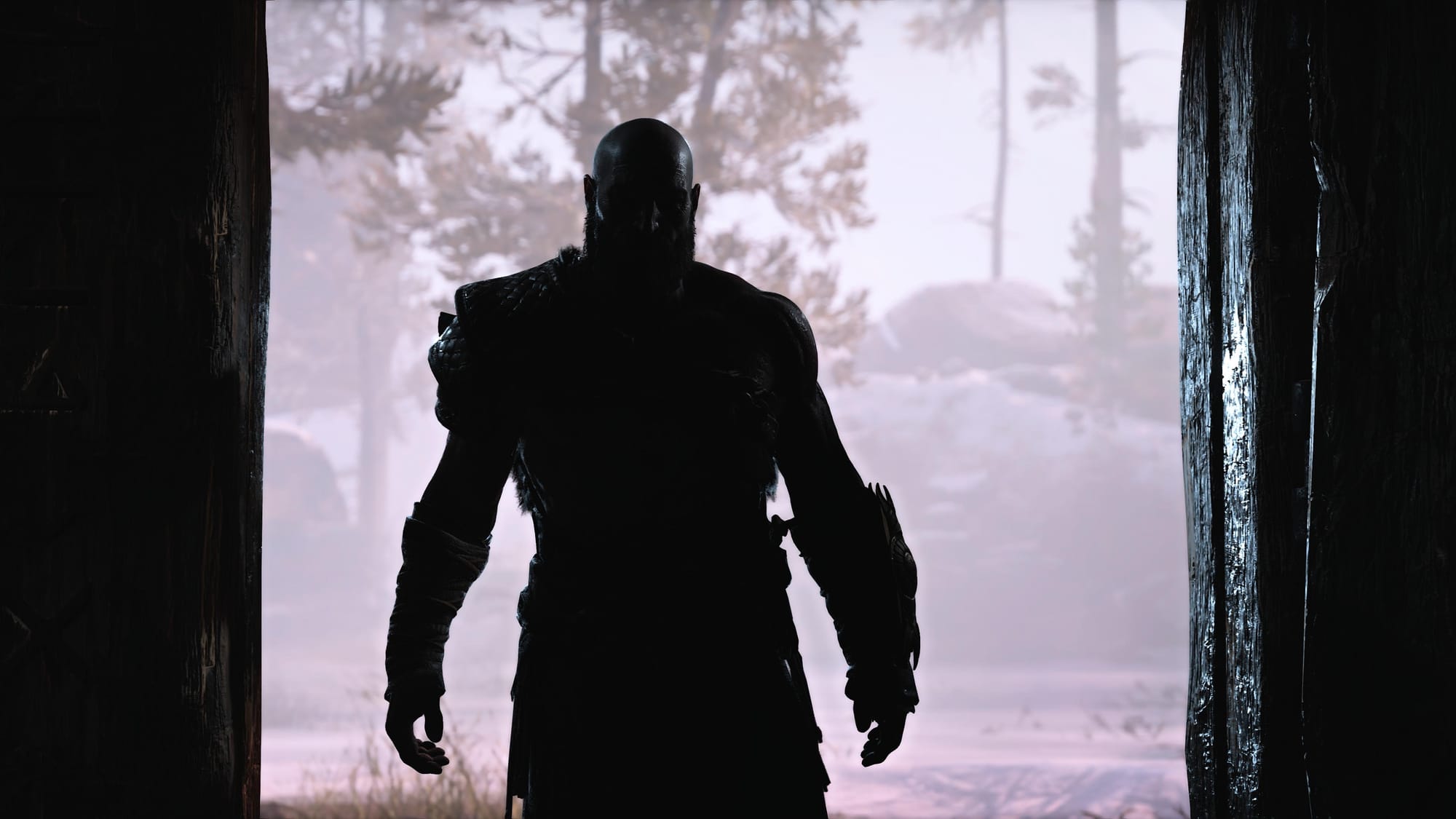
Without Faye, Atreus experiences Kratos's emotional unavailability directly, without the buffer that helped him make sense of it. And Kratos, who relied on Faye to bridge the emotional gap, has to learn to do that work himself—work he's spent decades avoiding as a matter of survival.
My father isn't Kratos. But he carries his own history of emotional restraint, his own learned patterns of expressing care through action rather than words, his own discomfort with vulnerability. My mother knew how to translate that for me. She'd tell me: "Your father worries about you, even if he doesn't say it directly." She'd explain to him: "Cort needs to hear that you're proud of them, not just see it in how you act."
Now we're both trying to do that work ourselves. He's learning to speak more directly. I'm learning to read the care in his actions even when the words aren't there. It's awkward and halting and sometimes we get it wrong. But we're learning.
The Long Work of Building a Direct Bridge
Halfway through God of War, there's a section where Kratos and Atreus are separated. They have to solve environmental puzzles and navigate threats while calling to each other across distance, coordinating without being able to see each other directly. It's a gameplay metaphor for what they're learning to do emotionally—reach each other across the gap without the person who used to make that reaching easy.
By the end of the game, something has shifted. Not that Kratos has become emotionally fluent—he's still Kratos, still holding more than he shares. But he's trying in ways he wasn't at the beginning. He tells Atreus that he's ready. He admits his past. He lets his son see him vulnerable.
And Atreus has learned to read his father differently. To see the attempts at connection even when they're clumsy. To understand that his father's distance isn't rejection but a different language of care.
The grief of losing Faye doesn't resolve. She's still gone. But Kratos and Atreus are no longer stranded in that loss. They've built a direct bridge between them—not the one Faye facilitated, but their own. It's not the same. It never could be. But it's theirs, and it's real, and it holds.
Researcher Dennis Klass coined the term "continuing bonds" to describe how grief doesn't require severing the connection to the person who died, but rather transforming that connection into a form that can persist. Faye's presence doesn't vanish from Kratos and Atreus's relationship. She's woven into it—in the skills Atreus learned from her, in the ways Kratos tries to honor her memory, in the family they're becoming.
My mother is woven into my father and me too. In the things she taught us both. In the ways we're trying to love each other the way she loved us. Her absence is always there, but so is her presence, translated into the new relationship we're building.
What the Game Does That Therapy Often Can't
There's something video games can do that traditional talk therapy often struggles with, especially for people whose brains don't easily translate between internal experience and verbal description.
Games show you the shape of relational grief. They externalize it. You don't have to find words for the specific texture of trying to reach someone when the person who bridged you is gone—you can watch Kratos reach toward his son and pull back. You can see the gap. You can feel the weight of it.
For me, that externalization was essential. I couldn't have articulated "relational grief" or "triangular loss" or "the reconstruction of the assumptive world" in the immediate aftermath of my mother's death. I just knew something was wrong, something was hard, something fundamental had changed.
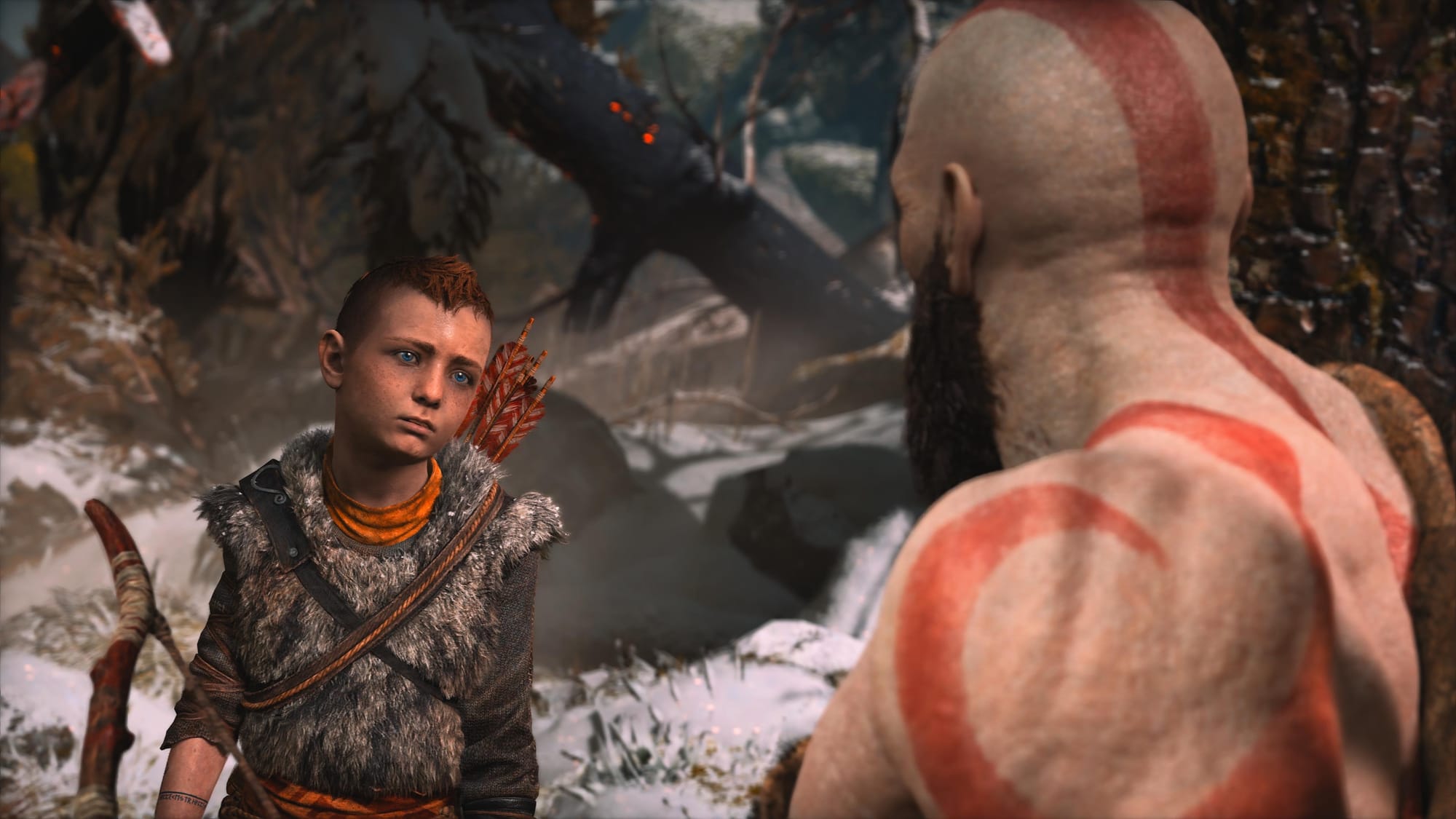
But I could see it in Kratos and Atreus. I could recognize the pattern. And once I could see it externally, I could begin to name it internally. The game gave me a framework, a vocabulary, a visible representation of something that was otherwise too diffuse to grasp.
This isn't escapism. It's not avoidance. It's how some minds process—through external pattern recognition, through systematizing, through seeing the abstract made concrete. The emotional work was happening. It just wasn't happening in the way grief "should" look.
The Story I'm Still Living
My father and I are still in the middle of our journey. We haven't reached the highest peak yet. We're still figuring out how to communicate, how to comfort each other, how to be in relationship without the person who made relationship easier.
Some days we get it right. Some days we miss each other entirely, talking past each other in the same way Kratos and Atreus do early in the game. Some days the gap feels too wide and I don't know if we'll ever really reach each other.
But we keep trying. We keep showing up to the work of building this direct bridge. And when I feel lost in it, I return to God of War. Not because it solves anything, but because it shows me the shape of what I'm doing. It reminds me that this work is real work, that the struggle to connect across grief is worth struggling with, that love can exist even when you don't yet know how to speak it fluently.
Kratos and Atreus make it to the mountain. They scatter Faye's ashes. They complete the promise. But the game doesn't end there—it opens into something larger, a continuing story of who they're becoming together.
I don't know what the highest peak looks like for my father and me. I don't know what "integrated grief" will feel like when we reach it, if we reach it. But I know we're on the journey. I know we're learning each other. I know my mother would be proud of us for trying.
And I know that games like God of War aren't just entertainment. For some of us, they're mirrors. They're maps. They're the language we need when our own words fail us.