The Dreamlight Inner Child Archetypes: How Biomes and Characters Become Emotional Guides

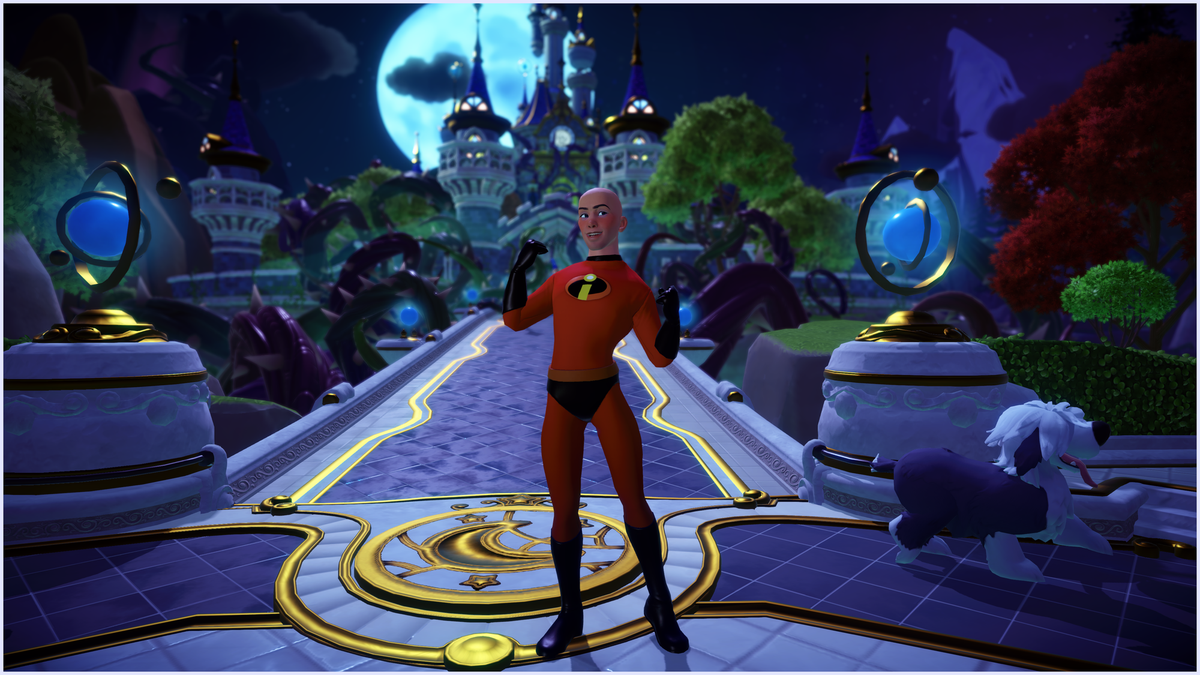
Inner child work often falters at the point where abstraction overtakes experience. People are asked to imagine internal parts, emotional needs, and developmental patterns without being given anything concrete to hold onto, which can leave the work feeling distant or inaccessible, especially for those who think relationally, visually, or spatially. Dreamlight Valley offers a different entry point. Rather than requiring players to conceptualize their internal world, the game allows them to move through it, translating emotional states into environments and relationships that can be explored, revisited, and gradually understood through direct experience.
This aligns with what clinicians have long observed: healing often happens through experience rather than explanation. Approaches like Internal Family Systems (IFS), which works with distinct internal "parts," and somatic therapies that prioritize felt sense over cognitive analysis, share a common recognition. Emotional integration tends to unfold through direct contact rather than intellectual understanding alone.
The Valley functions as an externalized map of emotional life, one that replaces introspection with interaction. Each biome carries its own atmosphere, pacing, and sensory tone, while each character embodies a distinct way of engaging with the world. Together, they create a system of reference points that make inner child work feel less like an abstract exercise and more like a lived process.
Archetypes as Emotional Orientation
In therapeutic contexts, archetypes are often used to describe recurring emotional patterns or relational roles, not as fixed identities but as recognizable orientations that help people make sense of their internal landscape. Dreamlight Valley mirrors this approach in a way that feels intuitive rather than analytical. The biomes are not merely scenic backdrops; they function as emotional environments that evoke different internal responses depending on where the player is and what they are doing.
Polyvagal theory offers one way of understanding these shifts. Stephen Porges's work describes how our nervous system constantly scans for cues of safety or threat, adjusting our physiological and emotional state accordingly. The biomes of Dreamlight Valley, with their distinct sensory profiles, may function as environmental regulators, offering the nervous system different kinds of input that invite different states of activation or rest.
As players move between areas of the Valley, they often notice subtle shifts in their own emotional state, whether that takes the form of grounding, ease, alertness, or unease. These responses provide information without requiring interpretation, allowing awareness to emerge organically through repeated contact rather than deliberate analysis.
The Plaza: Safety, Orientation, and Return
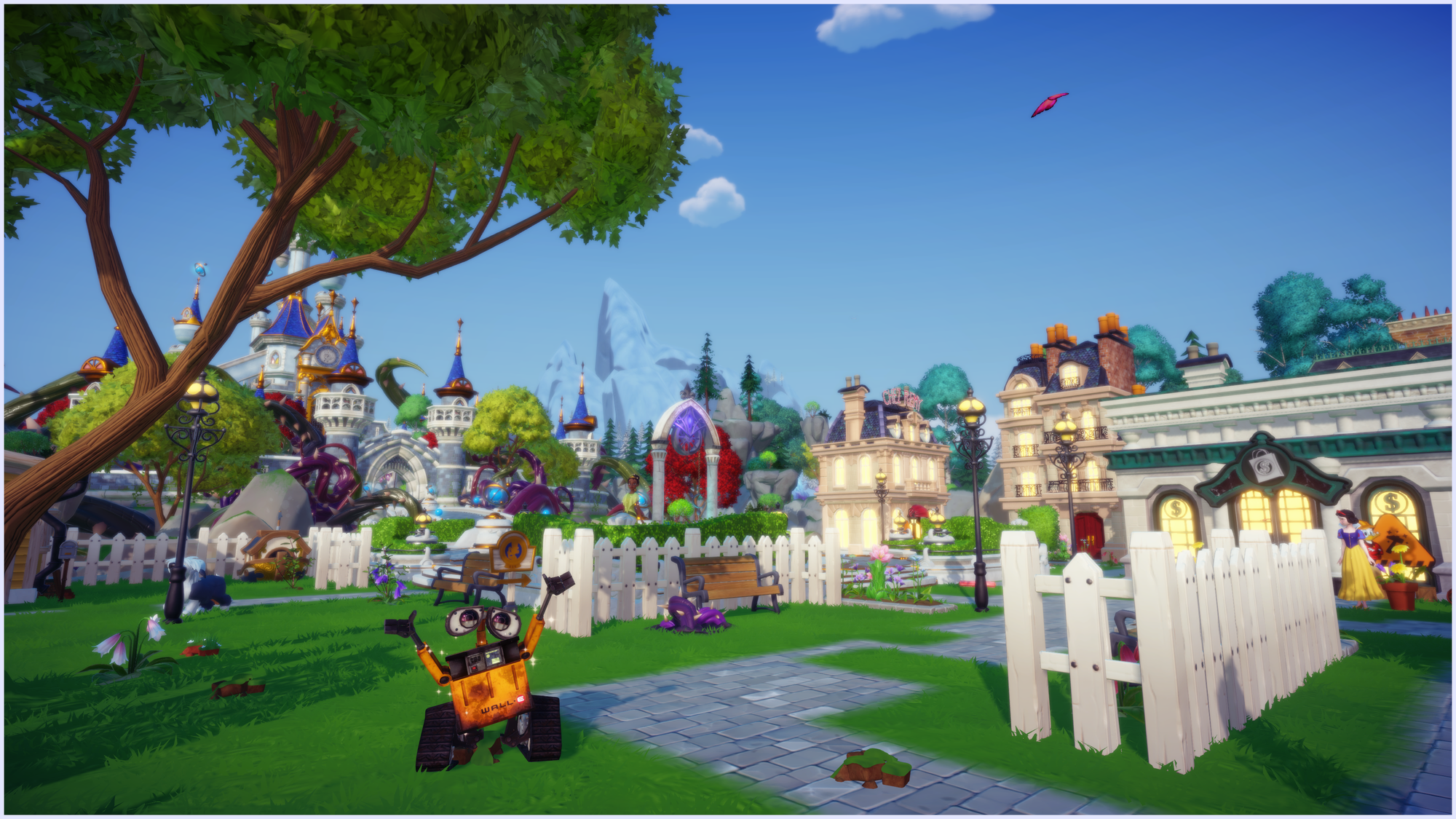
The Plaza tends to become a central anchor for many players, not because it demands attention but because it offers familiarity and clarity. Its open layout and navigable structure make it a place people naturally return to when they need to regroup, organize, or reorient themselves. Emotionally, the Plaza aligns with the need for basic safety and orientation, reflecting the part of the self that seeks reassurance through predictability and structure.
In polyvagal terms, the Plaza offers cues of safety that help activate the ventral vagal state, the nervous system's "rest and connect" mode. Its predictability signals to the body that hypervigilance isn't required here.
Spending time in the Plaza often brings a sense of steadiness, reinforcing the idea that there is a reliable internal point of reference that can be returned to when other emotional states feel overwhelming or disorganized.
Peaceful Meadow: Gentleness Without Urgency
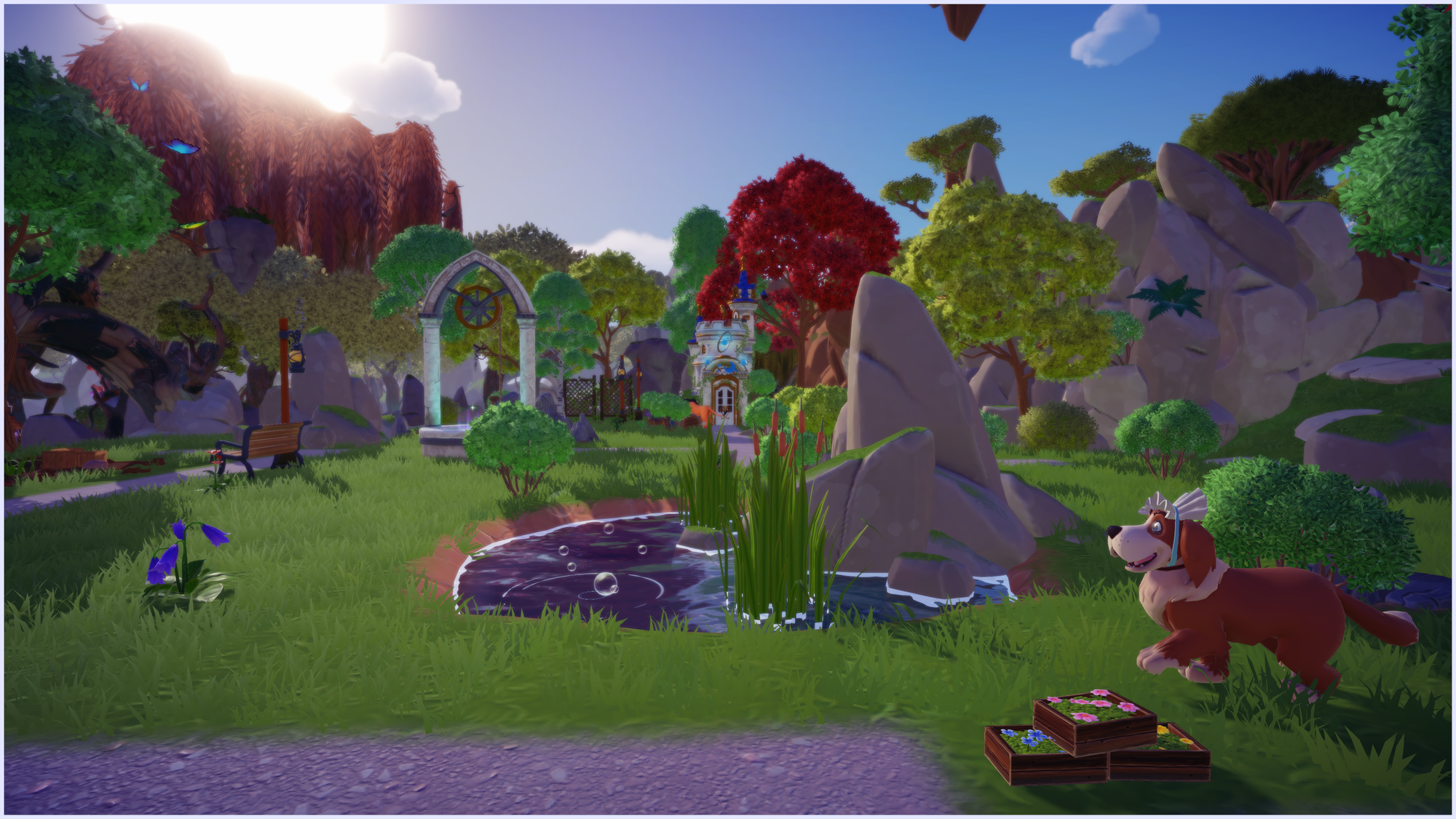
Peaceful Meadow introduces a noticeably softer emotional tone, inviting wandering, tending, and presence without imposing a sense of urgency. The space encourages slowing down and engaging with tasks that are simple, repetitive, and restorative. Emotionally, this biome aligns with innocence, gentleness, and ease, qualities that are often undervalued or actively discouraged in environments that prioritize productivity or vigilance.
For those whose early environments required constant alertness (what clinicians sometimes describe as chronic sympathetic activation or hypervigilance), Peaceful Meadow offers something that may have been scarce: permission to exist without performing. The repetitive, low-stakes activities mirror what somatic practitioners call "resourcing," building a felt sense of safety that the body can reference later.
For many players, spending time in Peaceful Meadow becomes an exercise in allowing softness to exist without justification, offering repeated exposure to a state of being that does not require effort, defense, or explanation.
Forest of Valor: Steady Courage and Boundaries
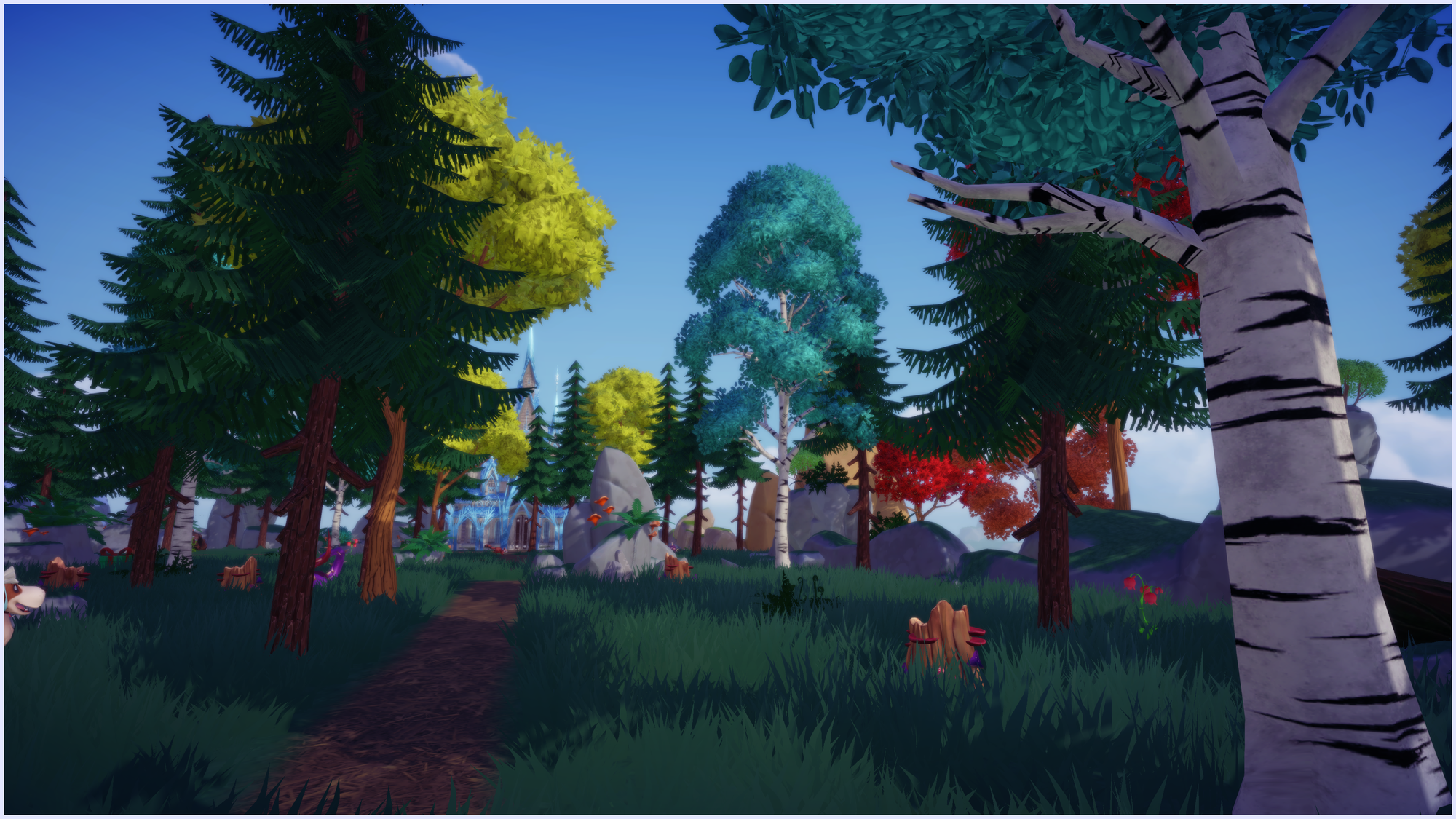
The Forest of Valor carries a different kind of emotional weight, one that is neither threatening nor passive. Its terrain suggests forward movement that requires attention and intention, encouraging players to engage with challenge in a measured and grounded way. Emotionally, this biome resonates with courage and boundary-setting, representing the part of the self that learns how to move through difficulty without sacrificing internal stability.
This mirrors what IFS practitioners describe as "Self-energy," the capacity to remain present and grounded even when encountering challenging parts or experiences. The forest doesn't ask players to fight or flee; it invites them to move forward with awareness. This is a fundamentally different relationship to difficulty than either avoidance or force.
Rather than framing courage as force or confrontation, the Forest models it as steadiness, persistence, and the capacity to remain oriented while navigating complexity.
Frosted Heights: Emotional Distance and Gradual Thaw
Frosted Heights often evokes feelings of distance or emotional stillness, with its muted palette and sparse activity creating a sense of containment that can feel both protective and isolating. For many people, this biome resonates with emotional numbness or shutdown, particularly for those who learned early on that strong emotional expression carried risk.
What the game portrays as frozen stillness maps closely onto what trauma-informed clinicians call the "freeze" or dorsal vagal shutdown response, a protective state where the nervous system conserves energy by dampening feeling and movement. This isn't weakness or avoidance; it's an adaptive response that once served a purpose. Importantly, research on trauma recovery suggests that thawing from this state cannot be rushed. It requires what Peter Levine calls "titration," meaning small, manageable doses of sensation and connection that gradually restore capacity without overwhelming the system.
Engaging with Frosted Heights does not demand warmth or transformation. Instead, it allows for gradual reintroduction of care, movement, and attention, mirroring the way emotional thawing often unfolds through patience and consistency rather than pressure.
Forgotten Lands: Grief, Fear, and What Was Set Aside
The Forgotten Lands carry a heavier emotional atmosphere, marked by distortion, darkness, and a sense of unease that many players approach with caution. This biome often aligns with grief, fear, and aspects of the self that were set aside for protection rather than erased entirely. These are areas that require pacing, preparation, and respect for readiness.
This mirrors what Dan Siegel calls the "window of tolerance," the zone within which a person can experience emotional activation without becoming dysregulated. Approaching the Forgotten Lands becomes practice in what clinicians sometimes call "pendulation": moving toward difficult material, then returning to safety, gradually expanding capacity without forcing exposure. The game naturally supports this rhythm. Players can leave whenever they need to, return to familiar ground, and try again when ready.
Spending time in the Forgotten Lands becomes practice in approaching difficult emotional material while maintaining a sense of agency and safety, reinforcing the idea that not all parts of the self need to be accessed at once in order to be integrated.
Characters as Relational Archetypes
Alongside the biomes, the characters of Dreamlight Valley serve as relational guides, each embodying a particular emotional orientation or style of engagement. Through repeated interaction, players learn how different emotional energies feel in relationship, not as abstract concepts but as lived experiences.
Attachment research tells us that emotional regulation is learned relationally. We internalize patterns of response through repeated interactions with caregivers who model and co-regulate different emotional states. The characters of Dreamlight Valley, while fictional, offer a similar function: consistent, predictable relational partners who respond in characteristic ways, allowing players to build familiarity with emotional patterns in a context that feels safe enough to explore.
Some characters bring intensity and spontaneity, others offer consistency and care, while others model optimism, reflection, or protective strength. Stitch's chaotic joy, Remy's nurturance, Anna's relational optimism, Scar's guarded strength, and Merlin's grounded perspective provide varied points of emotional contact that players can engage with at their own pace.
These relationships allow emotional learning to unfold through interaction rather than introspection, building what attachment theorists call "earned security," relational patterns that develop through new experiences rather than early ones.
An External Map of Internal Experience
Over time, the Valley begins to function as a coherent emotional map, one in which different needs, states, and responses exist side by side without competing for dominance. Some areas feel accessible and familiar, while others remain distant or challenging, reflecting the natural variability of internal life.
This externalization serves an important function. Narrative therapy has long emphasized that creating distance between a person and their experience (what practitioners call "externalization") allows for perspective and agency that feel impossible when we're fully merged with an emotional state. The Valley provides this distance naturally: feelings become places, patterns become characters, and the overwhelming task of "working on yourself" becomes the manageable act of tending a world.
By moving through the Valley as a whole, players practice transitioning between emotional states without losing coherence, building tolerance for complexity without fragmentation.
Why This Approach Supports Integration
This approach to inner child work remains effective because it stays experiential rather than prescriptive. Players are not asked to label or correct themselves. They are invited to notice patterns, respond with curiosity, and build relationships with different emotional states through repeated engagement.
This echoes principles found across multiple therapeutic modalities. Play therapy has long recognized that symbolic engagement allows emotional processing that direct conversation cannot access. Somatic approaches emphasize that the body often knows things the mind hasn't yet articulated. And IFS specifically invites curiosity toward different parts rather than judgment or correction, the same stance Dreamlight Valley naturally encourages through its gameplay.
Dreamlight Valley provides structure without rigidity and meaning without pressure, allowing understanding to develop gradually through experience rather than explanation. For many people, this creates a sense of internal cohesion that previously felt out of reach.
Holding the Full Range
Dreamlight Valley allows strength and softness, safety and exploration, grief and joy to coexist within the same world. By engaging with its biomes and characters, players practice holding a wider range of internal experience without becoming overwhelmed.
This capacity (what clinicians might call "affect tolerance" or "integrative capacity") doesn't develop through force or instruction. It develops through repeated, manageable exposure to the full range of emotional experience in a context that feels safe enough to stay present. The Valley offers exactly this: a world that holds everything, and invites you to do the same.
The work supports a fuller sense of self, one that can hold complexity without fragmenting.