The Freedom to Be Hated: What Fable Teaches the Conflict Averse

When Saying No Feels Dangerous
Some of us learn early that safety depends on being liked. We become careful, agreeable, endlessly accommodating because conflict feels like a threat, not a choice. The cost of that survival skill is authenticity. When saying “no” risks rejection, we forget how to choose anything that might make someone else uncomfortable.
People rarely become people-pleasers because they want approval. They become people-pleasers because, at some point, approval meant safety. Maybe a parent’s anger felt unpredictable, or love was conditional. Maybe peacekeeping became the only way to stay connected. Over time, the nervous system learns to treat disagreement as danger, and the body responds to tension the same way it would to a physical threat—heart racing, breath shallow, the impulse to fix or appease rising like instinct.
That’s why conflict-averse clients often describe themselves as “overreacting” to minor tension when, in reality, their body is doing exactly what it was trained to do: survive.
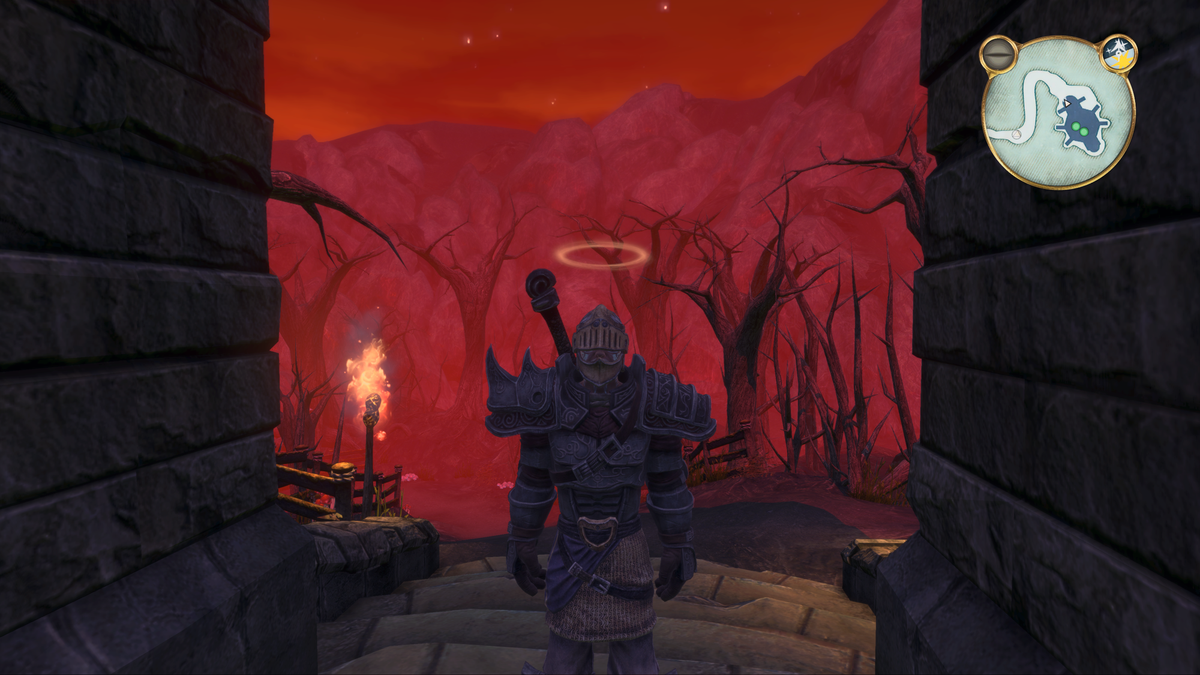
Then along comes Fable, a world that not only tolerates your darker impulses, it rewards them. You can steal from nobles, insult villagers, and ignore pleas for help. The crowd will boo, guards will chase you, your appearance will darken, and yet… you’re still here. The world still turns. You’ve survived being disliked.
For people pleasers and conflict-averse players, that’s a revelation. Fable becomes a controlled environment for practicing disapproval and difference–a simulation where saying “no” isn’t the end of the world.
Moral Failure as Exposure Therapy
Where Fable I framed morality in light and shadow, Fable II and III refined it into choice and consequence. You can make decisions that disappoint, hurt, or alienate others, but each is survivable. The villagers might gossip, your halo might dim, but the game keeps going.
In therapeutic terms, this mirrors exposure work for people with an intense fear of rejection or conflict. Each time you make an “unlikable” choice and tolerate the aftermath, your nervous system learns that the discomfort won’t destroy you. You can endure someone’s anger, a relationship rupture, a negative reaction, and still be safe.
For people in therapy, this can translate into real-world insight. Being disliked or misunderstood isn’t fatal. It’s feedback. And sometimes, it’s freedom.
Boundaries in Albion
When you stop performing goodness in Fable, something interesting happens: your character stops existing for everyone else and starts existing for themselves. They no longer give every beggar a coin or spare every thief out of obligation. Their actions become deliberate, not automatic.
That shift mirrors what happens in boundary work. The goal isn’t to become cruel or selfish; it’s to make your kindness a choice rather than a compulsion. In therapy, this often begins with discomfort: the shaky voice that says, “I can’t help right now,” or the guilt that follows turning someone down. In Fable, that moment is dramatized through boos and whispers. You can feel the tension of noncompliance, and you can survive it.
As the player learns to tolerate that social friction, they begin to internalize a vital truth: boundaries don’t make you bad. They make you real.
Reclaiming the Villain Archetype
Fable’s moral system caricatures evil–horns, red eyes, villagers fleeing in fear–but beneath that spectacle is an invitation to explore the parts of ourselves we’ve rejected. The “bad guy” becomes a stand-in for anger, ambition, or assertiveness, traits that people pleasers often suppress.
Jungian psychology would call this shadow integration: acknowledging the suppressed parts of ourselves and giving them space to exist without judgment. In Fable, you can embody that shadow literally. You can let the darker impulses breathe, then notice which ones feel surprisingly liberating. Maybe you enjoy defying the crowd. Maybe your anger feels less like danger and more like aliveness.
In therapy, people can unpack those experiences: Which “evil” actions felt satisfying rather than cruel? What boundaries or desires were being expressed underneath? How can that energy be channeled into assertiveness, not harm?
The goal isn’t to glorify cruelty, it’s to reclaim agency. To recognize that sometimes, being labeled “bad” just means you stopped betraying yourself to stay safe.
When the Crowd Turns
One of Fable’s most memorable sensations is hearing the crowd’s reaction shift. The same villagers who once cheered now boo. The same shopkeepers raise prices or flee. It stings, even when you know it’s fictional. But sitting with that sting is its own kind of mindfulness practice.
For conflict-averse players, those moments are opportunities to feel the embodied response of rejection: the spike of anxiety, the instinct to appease, the thought that says, I should fix this. And then, to let it pass. You can stay in the discomfort and keep playing. You can learn that disapproval isn’t fatal; it’s part of being seen.
I know this discomfort firsthand. I’ve been trying for years to complete an “evil” playthrough of Mass Effect, Fable, and Red Dead Redemption 2, and I cannot bring myself to do it. The guilt is immediate. The discomfort floods my body before I even confirm the dialogue choice. It’s absurd, I tell myself, it’s just a game. But my body doesn’t know that. It reacts as though I’ve endangered something real, which speaks to how deep and automatic these fears run. I need even these fictional characters to approve of me. That’s why games like Fable can be such novel tools for practice. They make the invisible visible. They give you a sandbox to experiment with self-definition and to feel what happens when you stop trying to be good in order to be safe.
Over time, that tolerance builds confidence. In both therapy and gameplay, the nervous system begins to rewrite the narrative: I can survive someone’s disappointment. I don’t have to earn safety with compliance.
Practicing Authenticity Through Rebellion
The beauty of Fable is that rebellion doesn’t erase your story; it changes it. Villagers’ reactions become more complex. Some fear you, others respect you. The world reflects not just your choices but your confidence in making them.
For people pleasers, that’s what growth looks like. You start by practicing small acts of self-definition–saying “no,” expressing anger, setting a limit–and watching the world continue anyway. Each act becomes a rehearsal for authenticity.
Becoming Whole, Not Perfect
In therapy, learning to disappoint others is one of the most profound forms of recovery. It means you trust your worth enough to let it be questioned. It means safety no longer depends on being liked.
Fable allows players to practice through play. It turns disapproval into data. You can be the bad guy and still be good at heart. You can set a boundary and still be loved. You can survive the boos and keep walking through Albion, horns and all, freer than before.