The Good Colonizer: What Avatar: Frontiers of Pandora Asks of White Players

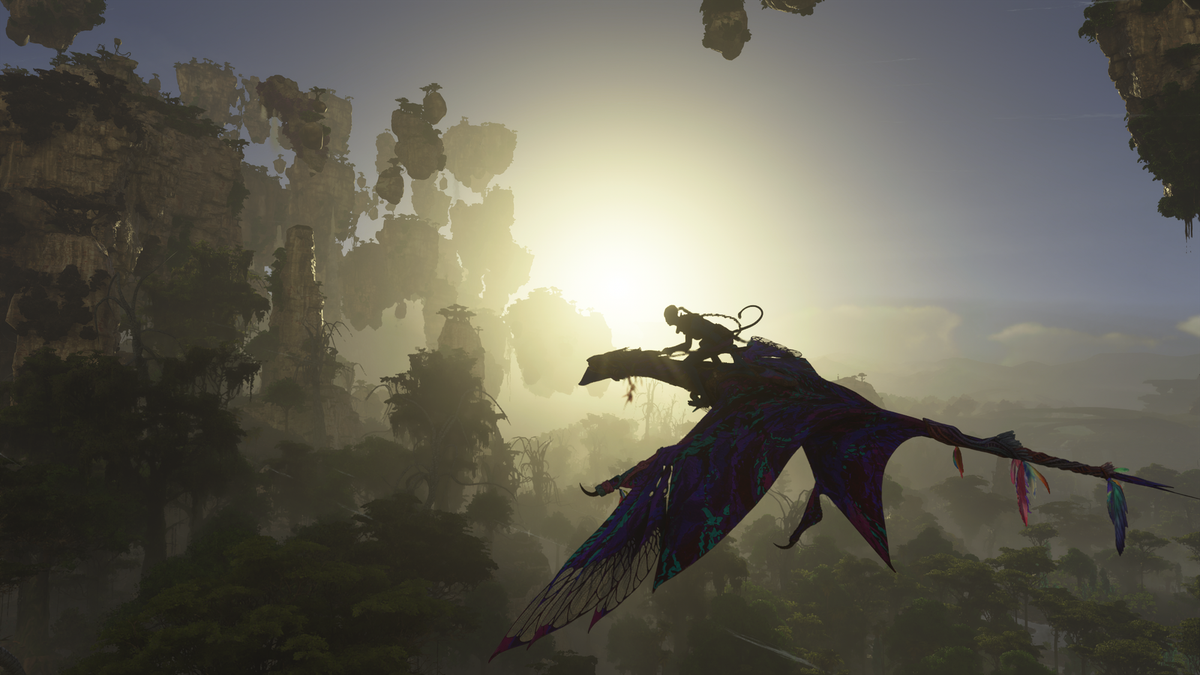
I'm a white therapist-in-training who writes about video games. I mention this upfront because the piece you're about to read requires it. This isn't a confession or a disclaimer. It's context. What Avatar: Frontiers of Pandora offers white players is something I experienced firsthand, and I think it's worth naming that before we go any further.
The Avatar franchise has a colonialism problem. This isn't a controversial claim. Since the first film's release in 2009, critics have identified and dissected the white savior narrative at its core: Jake Sully, a disabled white Marine, arrives on Pandora, learns Na'vi ways faster and better than the Na'vi themselves, tames the most fearsome creature in the sky, leads an Indigenous people to military victory, and ascends to chieftain. He gets the land, the girl, and a new body. The Na'vi, for all their spiritual connection to their world, apparently needed a white man to save them from other white men.
James Cameron has been explicit about his intentions. "Avatar is a science fiction retelling of the history of North and South America in the early colonial period," he told Business Insider. "Europe equals Earth. The native Americans are the Na'vi. It's not meant to be subtle." And it isn't. But intention and execution are different things, and what Cameron executed was a story that, despite its anti-colonial sympathies, replicated the very dynamics it critiqued. The Indigenous people exist as a backdrop to a white protagonist's transformation. Their culture becomes the vehicle for his redemption.
Indigenous critics have named this clearly. Crystal Echo-Hawk, president of IllumiNative and a member of the Pawnee nation, pointed out that Cameron "might be telling that story of colonization, but he's telling it through the lens of a White male." The Na'vi, constructed from a grab bag of non-white features and "primitive" stereotypes, become what scholars call a "homogenized Indigenous other," their particularity erased in service of a universal allegory that somehow still centers whiteness.
This is the franchise Avatar: Frontiers of Pandora inherited. And what the game does with that inheritance is important.
The Inversion
Frontiers of Pandora doesn't avoid the colonialism conversation. It walks directly into it. But it changes your position.
You don't play as a human. You don't play as someone learning Na'vi ways. You play as a Na'vi who was stolen as a child, raised in a residential school called The Ambassador Program, and taught to be human. You play as someone who has lost their culture, their language, their clan, their entire way of knowing the world. You play as someone who doesn't know how to be what they already are.
This changes everything.
When you step into the Western Frontier for the first time, you're not a capable outsider marveling at alien wonders. You're incompetent at being yourself. You don't know how to gather food properly. You don't recognize plants your ancestors knew intimately. You approach the world with the blunted senses of someone raised under fluorescent lights, trained to see Pandora as a resource rather than your relation. The game's opening hours are marked by small humiliations. Other Na'vi can tell you're different. You don't move right. You don't know the stories. You are, in a very real sense, colonized.
In therapeutic terms, this is profound. The game asks players to inhabit dispossession rather than witness it. You're not watching someone lose their culture. You're experiencing the disorientation of not having access to what should have been yours. The grief isn't abstract. It's in your hands as you fumble with a bow, in your confusion when elders reference traditions you've never learned, in the shame of being seen as other by your own people.
For white players, this is not the usual position. The white savior narrative offers a comfortable vantage point. You arrive as capable, as needed, as the solution. Frontiers of Pandora offers no such comfort. You arrive as damaged. You arrive needing to unlearn before you can learn. The slow work of cultural reclamation that follows isn't heroic in the way games usually frame heroism. It's awkward and humbling and sometimes painful.
This is what therapeutic literature calls perspective-taking, but it goes deeper than cognitive empathy. Interactive media creates embodied experience. You're not imagining what it might feel like to have your culture stolen. You're doing the fumbling, inadequate work of trying to get it back. Your hands are on the controller. Your frustration is real.
The Good Colonizer
And then there's Alma.
Alma Cortez is not John Mercer, the game's obvious villain. Mercer is easy to hate. He's the one who ordered the massacre of your clan, who murdered your sister Aha'ri in front of you, who ran the residential school with cruelty and calculation. He's the face of colonial violence at its most explicit.

Alma is your teacher. Alma wears a Na'vi body through the Avatar program, moving among you in a form that looks like yours. Alma saved you. When Mercer ordered your execution as the RDA evacuated Pandora, Alma shot the soldiers and hid you in cryosleep. She spent fifteen years believing you were dead, then led the mission that woke you up. She runs the Resistance now. She's on your side.
The game lets you believe this for a long time.
What emerges slowly, through audio logs and recovered memories and the persistent anger of your brother Nor, is a more complicated picture. Alma co-founded The Ambassador Program. She was there when Mercer approached your clan. She was there during the massacre that killed everyone except the children they wanted. She wrote notes expressing frustration that the Na'vi "just won't cooperate" and confidence that "they don't know what human culture could do to elevate them." She watched Mercer abuse you for years and, as Nor puts it, never stood up for any of you.
And she never told you any of this.
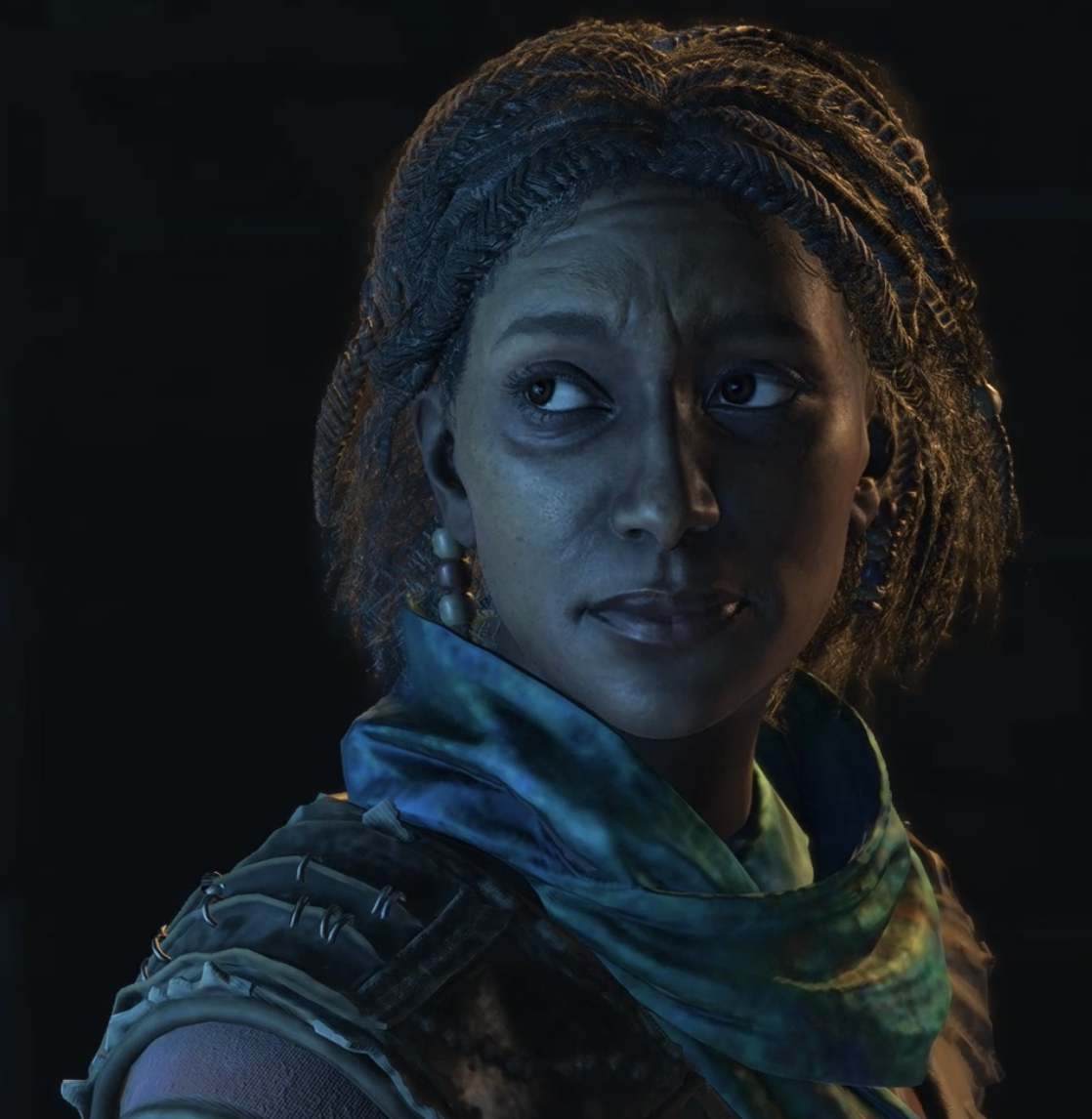
Alma is what I've come to think of as the “good colonizer.” She believed in the mission. She thought the program could "create a measurably better life for the Na'vi." She was motivated by ambition, yes, wanting to be the first to study Na'vi culture up close, but also by genuine conviction that she was helping. She wasn't twirling a mustache. She was writing grant proposals.
For white players, Alma is not comfortable to sit with. She's not the villain you can externalize. She's the well-meaning collaborator. She's the person who benefits from the system while believing themselves to be one of the good ones. She's the teacher who cares about her students but built her career on their displacement. She's the ally who will protect you within the structure but never threaten the structure itself.
In her early notes, Alma writes: "I just need time alone with the kids. With young, curious minds I can help Mercer nurture the ambassadors of the future. There's so much I can learn. And even more we can teach them. The institutions back home won't believe it. I'd be responsible for the greatest strides in Na'vi/human relations."
Read that again. There's so much I can learn. The careers built on studying Indigenous cultures. The academic positions, the publications, the expertise. And even more we can teach them. The assumption that what you bring elevates. That your knowledge is gift rather than imposition.
Alma isn't a monster. That's what makes her devastating.
"It Is Back With Us"
The moment that crystallizes everything comes at a celebration. The Resistance has won a major victory. Alma approaches you privately to express how proud she is of what you've become. Then Nor arrives, pleased that a memento of your clan has been recovered.
Alma says: "It is back with us."
Us. That single word. Nor's reaction is immediate. They are not the same, he tells her. She does not get to say "us."
"She wears us like a coat," Nor says elsewhere in the game.
Later, after Nor stabs Alma's Avatar body in an act of rage you cannot prevent, after her Na'vi form dies and she's forced back into her human body, you witness a conversation between Alma and Ri'nela, another survivor of the program. Alma grieves the loss of her Avatar, saying it "was her true self" and she will miss it. Ri'nela's response is blunt: "She will never be Na'vi."
What these moments name is something white players who have engaged in racial justice work will recognize: the desire to transcend the category, to be one of the good ones, to be accepted into the group you've harmed. Alma literally wore a Na'vi body. She preferred it to her own. She rarely left the connection unit because she wanted to communicate with her students in Avatar form. She wanted so badly to be with you rather than to be what she actually was.
In clinical work, we sometimes see white clients who are doing genuine antiracist work struggle with this desire to escape their own whiteness, to be exempt from the category through virtue. The therapeutic task is not to indulge this fantasy but to help them hold the discomfort of being implicated while still doing the work. Alma couldn't hold it. She hid behind a different body. She erased the truth of her participation for decades.
And the game doesn't let you, as the player, forgive her easily. There's a side quest called "Penance" where you're offered a choice: accept the past and forgive Alma, or confront it and refuse. What's striking is that either way, Alma isn't absolved. The other characters don't offer her redemption. They let her sit with what she did.
What the Body Knows
I want to pause on what it feels like to play through this.
The disorientation of the opening hours isn't just narrative. It's somatic. The controls feel unfamiliar because you're unfamiliar with yourself. The world is overwhelming because you were raised in sensory deprivation. When you first connect to Eywa, the living network of Pandora, through a sacred plant, it's not triumph. It's grief. Your ancestors speak to you. You learn your clan is gone. The spiritual practice that should have been your birthright becomes a source of mourning.
There's a sequence midway through the game where you explore the original TAP facility where you were first held as a child. Your brother Nor is on comms, narrating memories as you move through decaying hallways. He describes the disinfectant showers, how the RDA wanted to "wash the Na'vi off" of them. He tells you one of the children became obsessed with washing himself to the point of self-harm. "They said we were dirty," he says.
I played this section with my chest tight. The residential school parallels are explicit and intentional. The game draws directly from the history of Indigenous boarding schools, including the use of the phrase "residential school" in the opening. It's not subtle, and it shouldn't be. What's being named here is real. The unmarked graves. The severed braids. The children punished for speaking their own languages.
For white players, sitting in that facility, hearing those words, there is no comfortable position. You cannot be the hero who fixes this. The harm is already done. It was done to you (the Na’vi you’re playing as), and the revelation that slowly emerges is that the person who seemed to care for you was complicit in it from the beginning.
This is what we might call, in polyvagal terms, a window of tolerance challenge. The game keeps you in discomfort without offering easy discharge. You can't kill your way out of this particular grief. You can't save anyone from the harm that's already occurred. The only path forward is the slow, unglamorous work of reclaiming what remains.
For Practitioners
If you work with white clients processing racial identity, complicity, or what some frameworks call "white fragility," Frontiers of Pandora offers something unusual: an extended experiential exercise in inhabiting the other side. Not as tourism, not as appropriation, but as a sustained encounter with what colonialism actually does to people. The perspective isn't comfortable, and that discomfort is the point.
The game also offers a framework for understanding the "good colonizer" figure that many white clients will recognize in their families, their institutions, or themselves. Alma isn't reducible to individual malice. She's a system product. She believed in her work. She cared, within constraints she never challenged. The game asks what care means when it's built on theft.
For clients who are themselves survivors of institutional betrayal, whether in religious contexts, educational settings, or family systems, the game's treatment of Alma maps onto real relational patterns. The caregiver who protected you and also failed to protect you. The person whose love was genuine but conditional on your compliance. The mentor whose investment in you was also investment in their own identity as helper.
Janet Freyd's work on institutional betrayal becomes visible in Alma's arc. The violation isn't just the original harm. It's the cover-up, the decades of silence, the way the institution (the Resistance, in this case) continues to need the person who participated in the harm.
What's Being Asked
I said at the beginning that this piece required naming my whiteness. Here's why.
What Frontiers of Pandora asks of white players is not comfortable, and the discomfort is not incidental. It's the curriculum. The game asks you to feel what it's like to have your culture taken. To be incompetent at your own identity. To discover that someone you trusted was complicit in your harm. To sit with grief that doesn't resolve into heroism.
It asks you to notice when Alma says "us" and to feel why that's a violation.
It asks you to understand why Nor's rage is righteous even when it's also destructive.
It asks you not to be saved, not to be the savior, but to be the one who has to rebuild from fragments while the person who fragmented you asks for forgiveness.
This isn't representation in the usual sense. It's something closer to rehearsal. Not rehearsal for what it's like to be Indigenous, which white players cannot and should not claim. But rehearsal for what it costs. Rehearsal for how it feels in the body. Rehearsal for what "help" looks like from the receiving end.
The Avatar films, for all their anti-colonial intentions, never asked white audiences to feel colonized. They asked us to feel like good colonizers, like the ones who switch sides. Frontiers asks something harder. It asks us to feel like the ones who were switched on.
I don't know if playing a video game can change anyone's politics or deepen their capacity for solidarity. I'm skeptical of claims that media creates empathy in any durable sense. But I do think there's value in disrupting the usual position. In being placed, for forty or sixty hours, on the other side of the "us."
Alma wanted to be one of “us”. The game makes clear she never was. The question it leaves white players with is what we're going to do with that knowledge. Not in the game. In everything else.