Returning to Grace, Part Two: Building a Resource Kit in the Lands Between

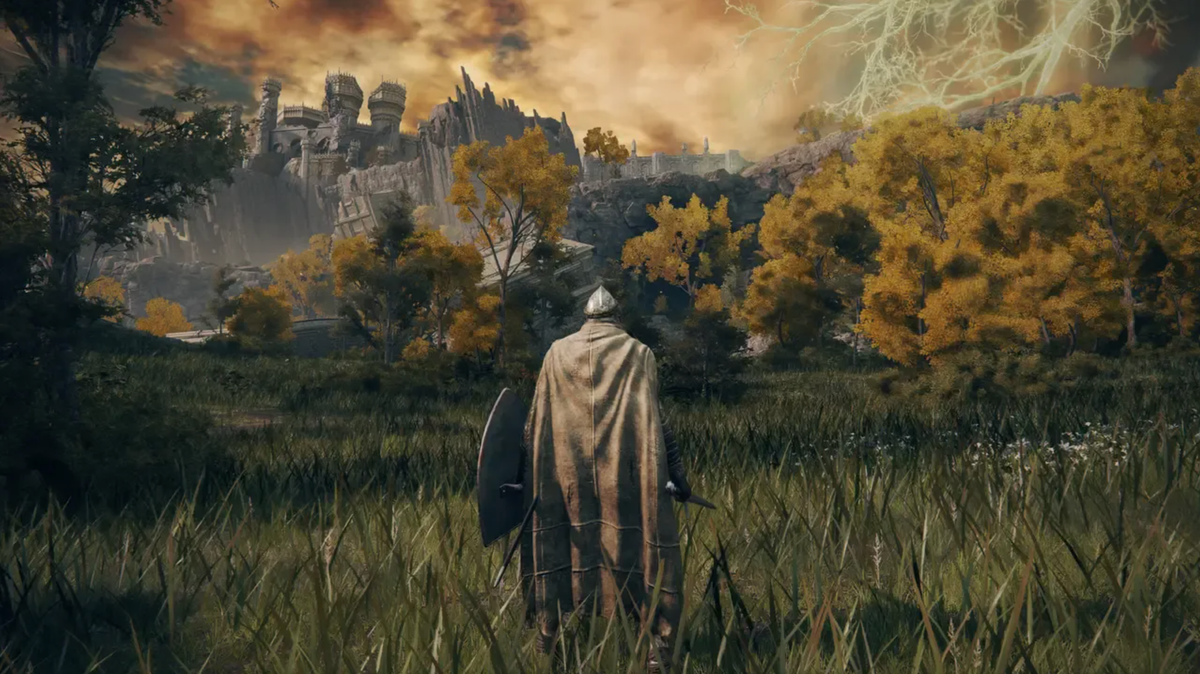
In Part One, we explored the clinical concept of resourcing onto Elden Ring's core design: the nervous system landscape of the Lands Between, Sites of Grace as externalized anchors, and the game's reframe of death as data rather than failure. That piece built the lens. This one puts it to work.
Part Two is a translation of Elden Ring's mechanics into practical therapeutic language—how the game's systems mirror specific resourcing skills, where its design teaches the body things the mind alone cannot learn, and where the framework reaches its limits.
Building an Internal Resource Kit Through Gameplay
One of the strengths of Elden Ring as a therapeutic playground is that its mechanics don't just symbolize coping skills in the abstract. They require the player to practice them in real time, under pressure, with consequences for getting them wrong. The translation from gameplay to clinical skill make it uniquely suited to help clients practice these skills in a low-stakes environment.
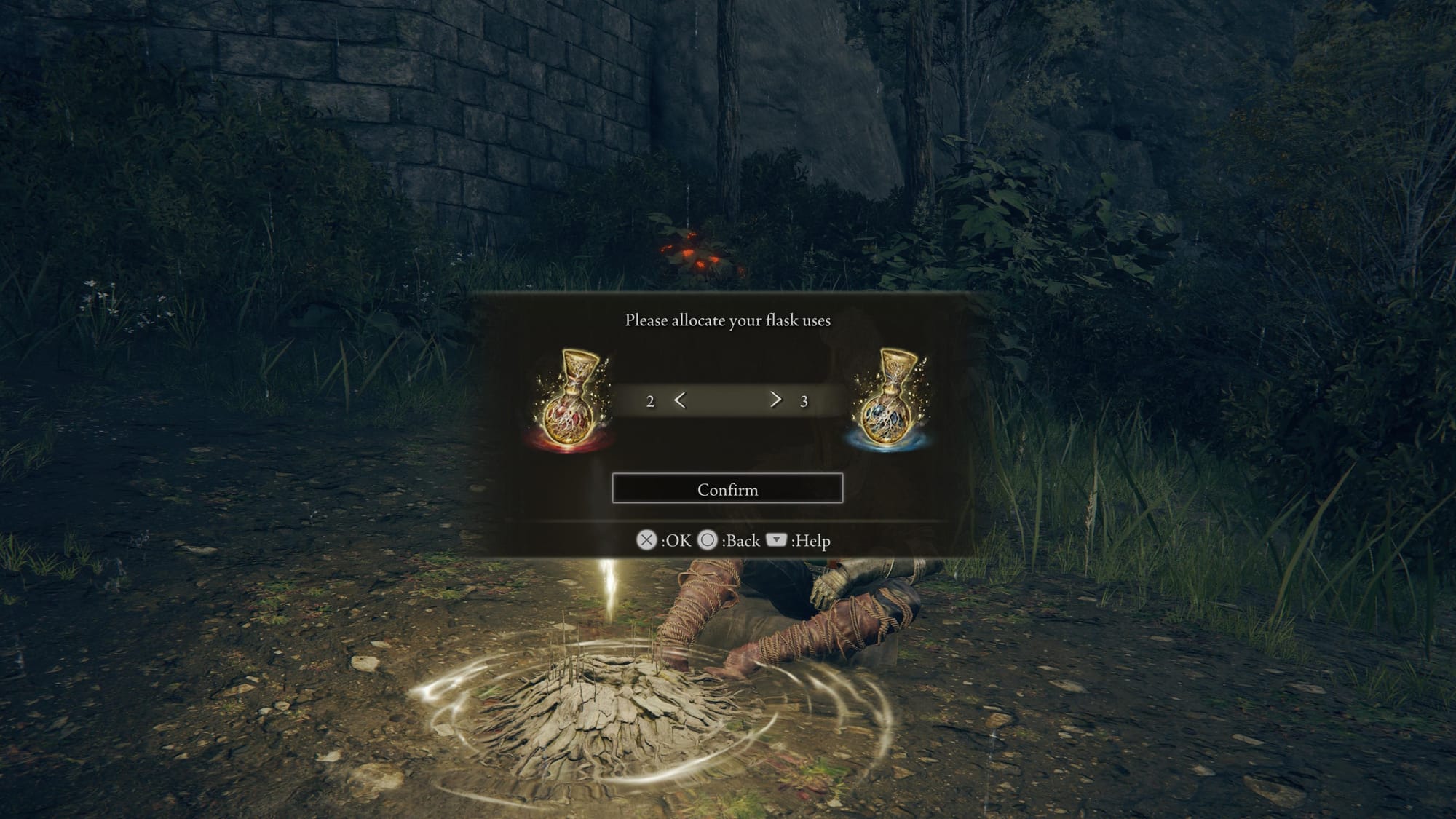
Flask management → Energy pacing. The player carries a limited number of flasks into every encounter, and the game splits them into two kinds. Crimson flasks restore health—the visible, immediate damage you've already taken. Cerulean flasks restore focus points, the resource that fuels spells, weapon arts, and active abilities. Before resting at a Site of Grace, the player allocates how many of each to carry. Too many crimson and you'll run dry on the abilities that prevent damage in the first place; too many cerulean and you'll have the tools to fight but no way to recover when those tools fail.
The skill is assessment in motion. How badly am I hurt? How much is left in each reserve? Am I taking damage because I'm out of position, or because I'm not using the abilities that would let me stay safe? Can I afford to push forward or do I need to recover now?
This is also energy pacing, and the two-flask system makes a distinction that one-resource games miss. Clients managing trauma recovery, chronic illness, grief, or burnout don't operate on a single energy reserve. There is the reserve for visible repair—rest, food, sleep, recovery from the activation that has already happened. And there is the reserve for active capacity—the energy required to do the work that prevents accumulation in the first place: the boundaries, the regulation skills, the difficult conversations, the appointments kept. Burning through one does not replenish the other. A weekend spent recovering from depletion is not the same as a weekend spent building capacity, and clients who cannot tell the difference often mistake one for the other.
The therapeutic work is learning to read both reserves accurately rather than defaulting to either overcaution or reckless expenditure—and learning that allocation is a choice made in advance, not an emergency response made under fire.

Spirit summons → Co-regulation. Elden Ring allows the player to summon allies—AI-controlled spirits or other players—to help with difficult encounters. The game does not penalize this. It's a built-in mechanic, available by design.
For clients who equate self-sufficiency with strength, this is worth exploring. Summoning help is not a concession. It doesn't invalidate the effort or erase the accomplishment. Co-regulation—the use of another person's nervous system to help stabilize your own—is one of the most well-supported mechanisms in trauma recovery. The game builds it into the system and treats it as legitimate strategy, not as a lesser form of success.
Leveling → Capacity building. When a boss feels impossible, the game offers an alternative to repeated head-on assault: leave, explore, accumulate runes, level up, and return with greater capacity. The boss doesn't change. You do.
This is the opposite of brute-forcing recovery. You don't overcome trauma by simply trying harder against the same overwhelming material. You build capacity—through stabilization, skill development, and strengthening the resources available to you—and then re-engage from a different position. Leveling in Elden Ring makes this process visible and concrete: the numbers go up, the damage becomes survivable, the window of tolerance expands.
Loadout choices → Personalized coping. Not every build works for every player. A strength-based greatsword approach and a dexterity-based dual-wielding approach can both defeat the same boss; they require entirely different timing, spacing, and risk tolerance. Players learn through experimentation what fits their reflexes, their preferences, their tolerance for specific kinds of pressure.
Not every coping skill works for every client. Breathwork regulates one person and triggers another. Journaling clarifies one person's thinking and floods another. The skill is not finding the right tool in some universal sense—it is learning which tools fit your specific needs, your specific history, your specific patterns of activation and recovery.
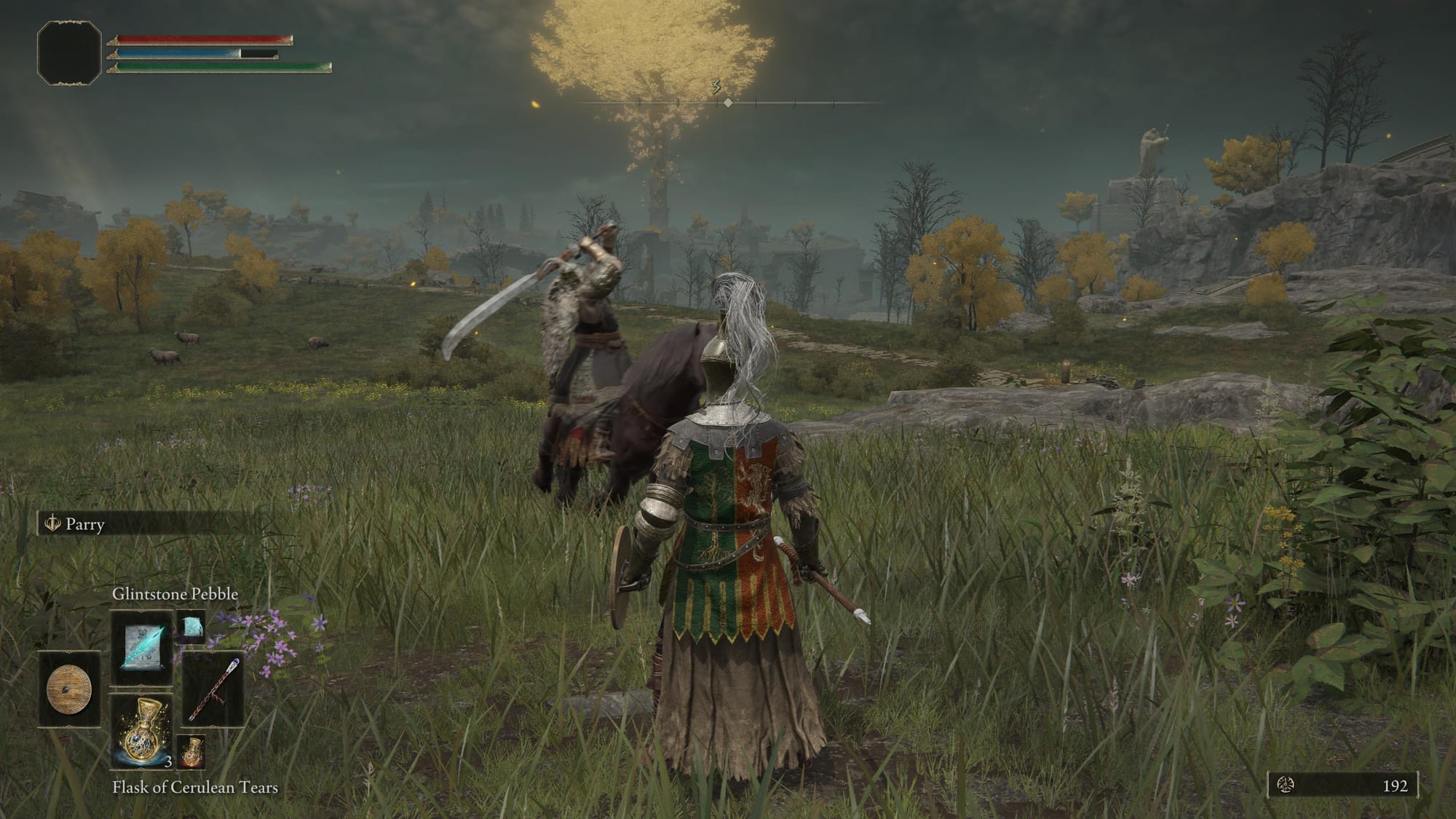
Titration → Dosed engagement. This one is subtle and clinically significant. In Elden Ring, you can walk through a boss fog gate, observe the arena, watch the opening attack pattern, and then die or retreat—without committing to the full fight. You can enter, gather information, and leave. "Just looking" is a legitimate strategy.
In trauma work, this mirrors titration: engaging with difficult material in small, survivable doses rather than flooding the system with the full weight of the experience at once. You don't have to process the entire trauma narrative in one session. You can approach the edge, notice what activates, and pull back to resource before going further. Elden Ring mechanizes this. The fog gate is always there. You decide how far through it you go.
Practicing Return Instead of Avoidance
There are two ways to fail at a boss fight that don't involve dying.
The first is avoidance: never going back. The boss remains in its arena, untouched, while the player routes around it permanently. The challenge is managed by refusing to engage with it. In life, this is experiential avoidance—the systematic elimination of situations, feelings, or memories that might trigger activation. It works in the short term and it shrinks the world over time.
The second is flooding: charging through the fog gate over and over without adjusting, without resourcing, without learning from the data each death provides. The exposure is unmodulated, and the activation is unprocessed. This isn't persistence. It is repetition compulsion wearing persistence as a costume.
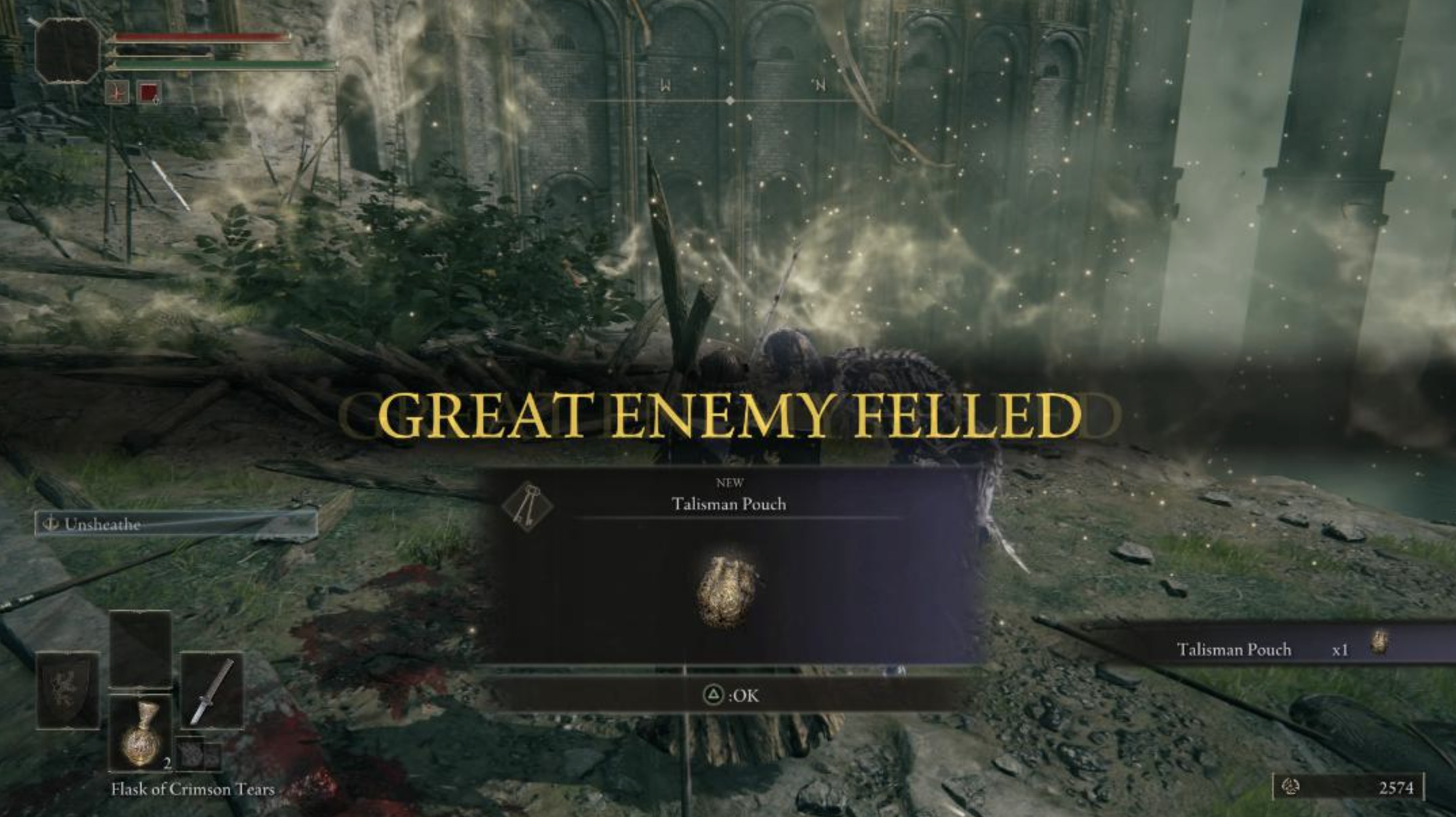
The middle path—the one Elden Ring rewards—moves through a cycle: engage, get overwhelmed, return to grace, resource, re-engage with new information. Each attempt is informed by the last. Each return is deliberate rather than reactive.
What makes this more than cognitive strategy is the somatic dimension. Elden Ring teaches boss patterns not only through observation but through the body. Dodge timing becomes reflexive. Attack windows register as felt sense before they register as conscious thought. The player develops physical recognition—muscle memory, anticipatory readiness—built through repetition rather than instruction.
This is exactly how players describe their eventual success. Talk to anyone who has cleared a boss they'd been stuck on for days, and the language is almost never about strategy. It's about the moment the fight stopped requiring conscious thought—when the dodge happened before the decision to dodge, when the attack window registered as opening before they could have named what they were seeing. "It just clicked." "My hands knew what to do." "I stopped thinking about it." This is muscle memory described from the inside: the nervous system having rehearsed the sequence enough times that it no longer needs the cognitive layer to execute. The mastery is in the body before it is in the mind.
This is bottom-up learning. The nervous system internalizing safety through experience rather than understanding it intellectually. Trauma recovery works the same way. Insight matters, but it is not sufficient. The body has to rehearse the return—has to practice moving toward difficulty, tolerating the activation, and arriving back at safety enough times that the sequence becomes something the nervous system knows rather than something the mind believes.
Elden Ring rewards adaptive persistence: the willingness to return differently, not just to return again.
Tolerance for Uncertainty and Lack of Control
Elden Ring does not explain itself.
There's no codex entry telling you what an enemy's weaknesses are. No tooltip confirming that your weapon choice is optimal. Hidden mechanics govern damage calculation, poise, status buildup, and scaling in ways the game never actually explains. Entire areas, bosses, and questlines can be missed without any indication that they existed. NPC questlines progress on obscure triggers and fail permanently on decisions you didn't know you were making.
For players accustomed to games that provide clarity, this is disorienting. For players who live with anxiety, the impulse to look everything up—to consult the wiki, to follow the optimal path, to eliminate the possibility of making a wrong choice—is powerful and immediate.
The game doesn't punish that impulse, but it also does not require it. You can play Elden Ring without understanding its hidden systems. You can make suboptimal choices and still progress. You can miss things and the world continues.
The therapeutic resonance here is with the broader project of rebuilding a sense of safety after trauma. Safety, in recovery, doesn't mean controlling everything. It can't. The world remains unpredictable; other people remain opaque; the future remains unwritten. What changes in recovery is the internal stance toward that uncertainty. The shift is from "I must know everything in order to be safe" toward "I can handle not knowing" and "I can recover when things go wrong."
Elden Ring practices this tolerance at a mechanical level. You will encounter things you don't understand. You will make choices with incomplete information. You will be ambushed by threats you could not have predicted—including, as discussed in Part One, invasions that arrive without consent or warning. None of this destroys you. The game continues. You try again.
Identity and the Tarnished Self
The player character in Elden Ring is called a Tarnished. The lore is layered and deliberately ambiguous, but the core identity is clear: you are someone who was broken, exiled, stripped of grace, and called back.
For clients navigating trauma recovery, that identity carries weight. The Tarnished isn't pristine. They aren't starting from a position of wholeness or advantage. They have been marked by what happened to them, and the world they move through knows it. And yet the game's entire premise is that this marked, exiled figure is capable of something extraordinary—not despite what happened, but through the process of moving forward with it.
This is not a redemption arc in the traditional sense. The Tarnished doesn't overcome their brokenness by becoming unbroken. They become someone who can move through a hostile, beautiful, incomprehensible world and engage with it meaningfully. The identity evolves not through erasure of damage but through accumulation of experience, skill, and choice.
The resourcing tie-in is this: you aren't just surviving the Lands Between. You are becoming someone who can navigate it. Each Site of Grace rested at, each boss returned to, each new region explored builds not only mechanical capacity but a sense of identity grounded in action rather than injury. The Tarnished is always in process. So is the person healing from trauma. The question is not "am I fixed?" The question is "what am I becoming capable of?"
When This Framework Doesn't Work
This framework is not universally appropriate and clinical credibility requires naming the boundaries explicitly.
Clients with gaming disorder. For clients whose relationship with gaming already functions as avoidance—where play has become compulsive, where the game replaces rather than supports engagement with life—adding a clinical frame to gameplay can reinforce the pattern rather than interrupt it. The therapist's role in that case is to assess the function of play before integrating it into treatment.
Clients who use gaming primarily to dissociate. The goal of resourcing is increased presence, not further disconnection. If a client's primary mode of engagement with Elden Ring (or any game) is dissociative—if they play to disappear rather than to experience—then the game is functioning in opposition to the therapeutic aim. This does not mean the client cannot eventually use games therapeutically, but the dissociative pattern needs to be addressed first.
Clients for whom Elden Ring specifically triggers shame or dysregulation around failure. The frustration tolerance argument in Part One assumes a client who can, with support, tolerate the activation that repeated failure produces. For some clients, "YOU DIED" doesn't land as data. It lands as confirmation of a deeply held belief about their own inadequacy. The frustration response has to be assessed before the game is introduced as a therapeutic tool, not discovered mid-session.
Trauma associated with gaming environments. This is rare but clinically relevant. Clients whose trauma history involves online harassment, gaming-adjacent abuse, or harmful dynamics within gaming communities may experience the game environment itself as activating regardless of its content.
Acute crisis or early stabilization phase. Resourcing metaphors require enough existing window of tolerance to hold them. A client in active crisis or early stabilization doesn't yet have the internal scaffolding to engage with a complex framework. The metaphor assumes a baseline of stability that is not yet present in early-phase work. This framework belongs in the stabilization-to-processing transition, not in acute intervention.
None of these contraindications invalidate the framework. They define its boundaries—which is what makes it usable rather than aspirational.
Reflection Prompts
These can be used individually, in session, or as journaling anchors.
- Where are your Sites of Grace in real life? The places—physical, relational, internal—where you can rest and restore capacity?
- What does "returning" look like for you after overwhelm? Do you return, or do you avoid? What would returning differently look like?
- What's a boss fight you've been either avoiding entirely or charging into without adjusting your approach?
- Where in your life might leveling up serve you better than pushing harder?
- Who are your summons? Who helps regulate your nervous system, and do you let them?
- Where are you walking through the fog gate without titrating—engaging with the full weight of something before you've gathered enough information to know what you're facing?
The Grace You Keep Returning To
You don't have to defeat everything in one attempt. This is true in Elden Ring and it is true in recovery and it is true in the quiet, ongoing work of learning to live in a nervous system that has been shaped by things it did not choose.
Progress in trauma recovery is cyclical, not linear. You will return to Sites of Grace you thought you'd outgrown. You will face bosses that felt manageable last week and feel impossible today. You will lose runes. You will get invaded. The world will not pause to let you catch up.
But the ability to return is the skill. Not the ability to win. Not the ability to endure without flinching. The ability to get overwhelmed, to rest, to gather yourself, and to walk back through the fog gate one more time—different than you were the last time you tried.
In Elden Ring, grace is something you follow.
In healing, grace is something you learn to offer yourself.